


Update, 2026: The AI Operator has narrowed its focus to AI and building with AI in production. This post is from before that shift. If that’s what you’re here for, start with I rebuilt Karpathy’s LLM Wiki, I built this for myself. Then 1,374 strangers cloned it., or what The AI Operator is now.
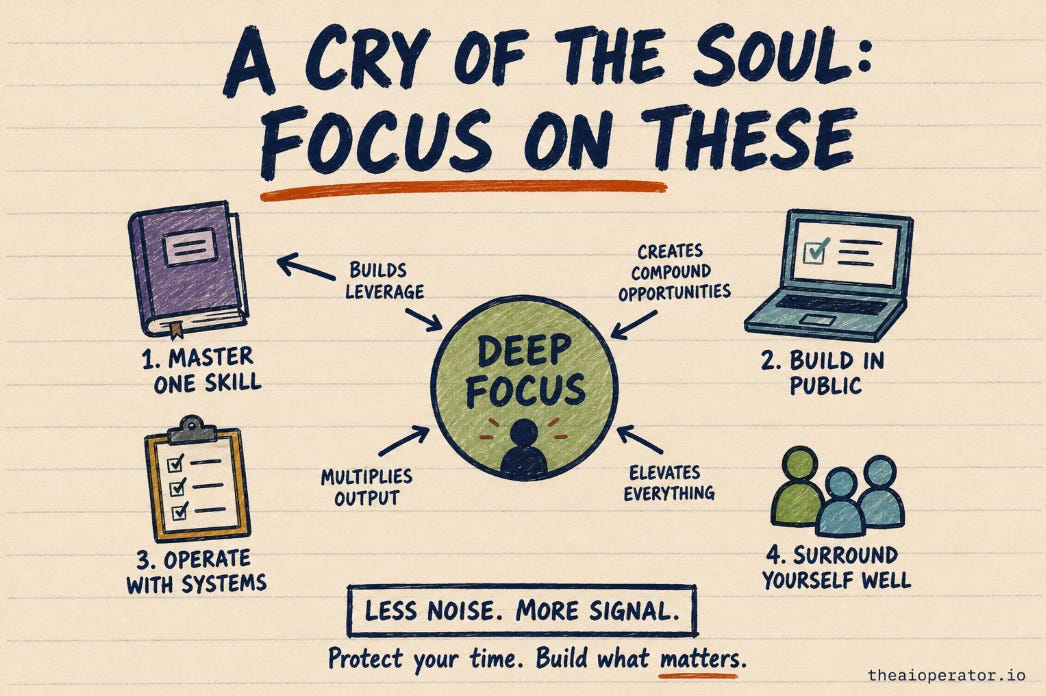
When I first decided to pursue a career as a data analyst, I was bombarded with countless articles and videos listing an overwhelming number of skills I supposedly needed to master. Titles like “100 Skills to Become a Data Analyst” made me feel defeated before I even started. The lists were filled with terms like “machine learning,” “data wrangling,” “predictive analytics,” and “big data,” which were completely foreign to me at the time.
My Overwhelming Start
This is my cry of the soul. I remember asking a seasoned data analyst for advice, expecting a clear path to follow. Instead, I was told to start with Python and then move on to other skills like R, Hadoop, Spark, and more. As a beginner, I had no idea what these words even meant, let alone how to use them. It felt like I was staring at an insurmountable mountain, and I almost gave up before I even started.
Discovering the Core Skills
After months of feeling overwhelmed and lost, I decided to strip everything back to the basics. I focused on two core skills that I found most crucial: SQL and a visualization tool. These two skills became the foundation of my journey into data analysis.
Why SQL Was a Game Changer
SQL (Structured Query Language) is the backbone of data analysis. It’s the standard language for managing and manipulating databases, which are the heart of any data analyst’s job. With SQL, I learned to:
Query Databases: Extract the data I needed from vast datasets.
Perform Data Cleaning: Clean and preprocess data to ensure accuracy.
Aggregate Data: Summarize data to find meaningful patterns and insights.
Mastering SQL gave me the ability to handle the most crucial part of data analysis: working with the data itself. Once I had a strong grasp of SQL, I could confidently navigate through databases and start performing real analysis.
The Power of Visualization Tools
The second essential skill was proficiency in a visualization tool like Tableau, Power BI, or even Excel. These tools enabled me to:
Create Interactive Dashboards: Present data in a visually appealing and easy-to-understand format.
Identify Trends and Patterns: Visual representations made it easier to spot trends that weren’t obvious in raw data.
Communicate Findings: Share insights with stakeholders in a compelling way that drives decision-making.
Visualization tools transformed raw data into actionable insights. They allowed me to tell a story with data, which is a crucial part of a data analyst’s role.

The Certificate Misconception
During my learning journey, I completed several courses on platforms like Udemy and Coursera. While these platforms offer valuable learning resources, the certificates of completion you receive aren’t particularly impactful when applying for jobs. They’re not worthless, but they shouldn’t be viewed as extraordinary qualifications. What truly makes a difference are industry-recognized certifications like:
Oracle Database SQL Certified Associate: This certification requires passing a rigorous exam, ensuring you have a solid understanding of SQL.
Certificates from BI Tools like Power BI and Tableau: These certifications are akin to a driver’s license; you can’t pass the exam without genuine knowledge and preparation.
These certifications are highly respected in the industry because they prove you have the necessary skills and have been thoroughly tested. I’m currently preparing for these exams, and while I haven’t obtained these certifications yet, I’m confident in the path I’m taking.
Simplifying My Learning Path
By focusing on these two core skills — SQL and a visualization tool — I built a strong foundation for my career as a data analyst. This approach simplified my learning path and made the journey less daunting. Once I became comfortable with these, I gradually expanded my skill set based on my interests and job requirements.
My Takeaway
Don’t be discouraged by the overwhelming list of skills you find online. You don’t need to know everything to start your career in data analysis. Begin with SQL and a visualization tool. Master these, and you’ll be well-equipped to handle the demands of most entry-level data analyst positions. Remember, the key to success is to start simple and build your expertise over time.
I’m still on this journey myself, preparing for the Oracle Database SQL Certified Associate and BI tool certifications. I invite you to follow this path with me. Let’s focus on mastering the basics and building a solid foundation together.
