


Update, 2026: The AI Operator has narrowed its focus to AI and building with AI in production. This post is from before that shift. If that’s what you’re here for, start with I rebuilt Karpathy’s LLM Wiki, I built this for myself. Then 1,374 strangers cloned it., or what The AI Operator is now.
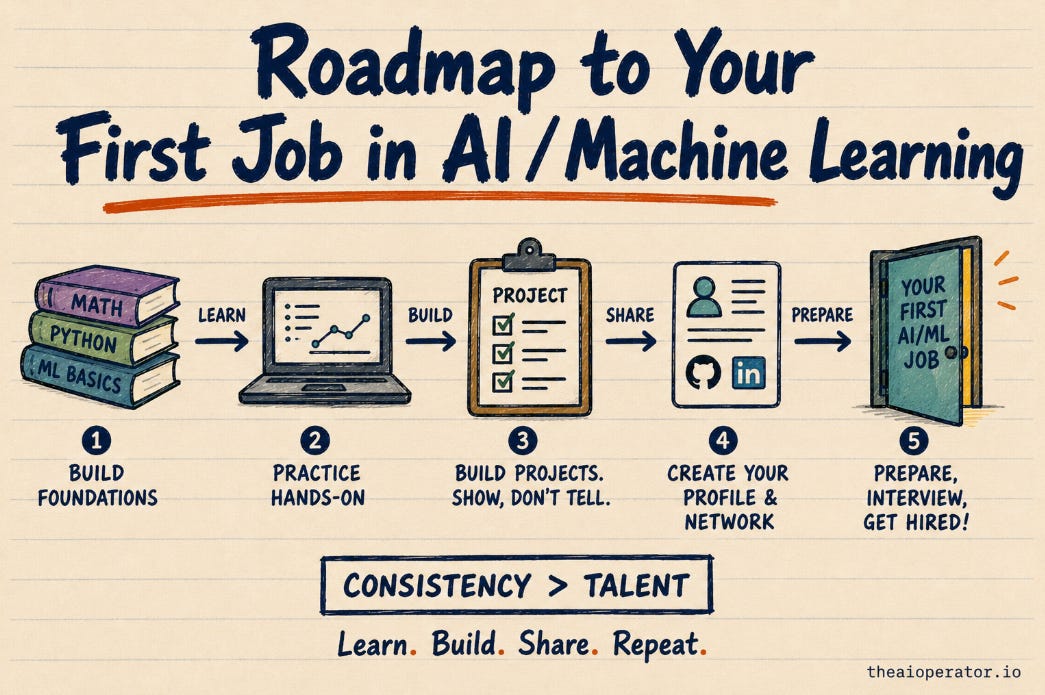
🎯 Step 1: Target Entry-Level Job Titles
Starting from scratch? These entry-level roles in AI, Machine Learning, and Data Analytics are accessible with minimal experience and education:
Junior Data Analyst / Data Analyst Intern — Assist data teams in collecting, cleaning, and analyzing data to generate insights.
Machine Learning Intern / ML Assistant — Support ML teams by preparing data, running model tests, and helping with basic reporting.
Data Technician / Data Associate — Focus on organizing and managing data to ensure quality and usability for analysis.
Data Labeling Specialist / Data Annotator — Label and categorize data to prepare it for machine learning models.
Business Intelligence (BI) Assistant — Help BI teams create dashboards, reports, and data visualizations for business insights.
If you’re ready to enhance your data skills, check out Analyst Builder. Use the code “ABNEW20OFF” for 20% off your first purchase and start learning today!
📘 Step 2: Core Skills You Need to Learn
1. Python Programming 🐍
Why: Python is the most widely used language for data manipulation, analysis, and machine learning.
Get Started: Start with basic syntax, then move on to data manipulation libraries like Pandas and NumPy.
2. SQL for Data Querying 🗄️
Why: SQL is essential for accessing, filtering, and managing data from databases.
Focus On: Master SELECT, JOIN, and GROUP BY clauses to handle data efficiently.
3. Data Cleaning and Wrangling 🧹
Why: Cleaning data is crucial for analysis, making it ready for insights or model building.
Practice: Use Pandas in Python to clean, transform, and organize messy datasets.
4. Data Visualization Basics 📊
Why: Effective data visualization turns raw data into clear, actionable insights.
Tools to Learn: Start with Excel, then move on to Power BI or Tableau for more advanced visualization.
5. Basic Statistics 📈
Why: Understanding basic statistics allows you to interpret data and verify results accurately.
Start Simple: Focus on mean, median, standard deviation, and probability basics.
6. Excel / Google Sheets 📑
Why: Excel is widely used for quick data analysis, entry, and reporting.
Master Key Functions: Learn VLOOKUP, pivot tables, and other essential formulas.
7. Version Control (Git & GitHub) 🌐
Why: Version control is critical for tracking code changes and collaborating on projects.
Focus On: Basics like committing, pushing, pulling, and branching in Git.

🛠️ Step 3: Essential Tools for AI, Machine Learning, and Data Analytics
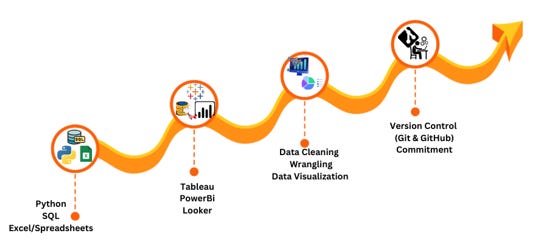
1. Python (Pandas, NumPy, Scikit-Learn) — Core data handling, analysis, and ML tools.
2. SQL (MySQL or PostgreSQL) — A must for querying and managing database data.
3. Excel / Google Sheets — Great for basic analysis and data reporting.
4. Jupyter Notebooks — Perfect for code experimentation, data exploration, and documentation.
5. Power BI or Tableau — Critical for creating data visualizations and dashboards.
6. Git & GitHub — Essential for version control and code sharing.
7. Google Analytics — Valuable for data analysis in digital marketing roles.
8. VS Code / Anaconda — To streamline Python programming.
9. Slack or Teams — Widely used in tech workplaces for communication and collaboration.

🚀 Step 4: Learning Priorities for Fast Entry
For the fastest path to landing an entry-level job, focus on learning these in this order:
Python & SQL — Foundational for data manipulation and analytics.
Excel & Power BI/Tableau — Key for reporting and data visualization.
Jupyter Notebooks & GitHub — This is for hands-on coding and sharing insights.
Statistics & Data Cleaning — Essential for making data usable and generating insights.
🌟 Pro Tips to Succeed
Practice Real-World Projects: Use free datasets from Kaggle or Google Data Analytics to apply your skills.
Network on LinkedIn: Connect with tech professionals and explore job opportunities.
Build a Portfolio: Showcase projects on GitHub, including Python scripts, SQL queries, and Tableau dashboards.
Consider Certifications: Entry-level certifications in Python or SQL can validate your skills and strengthen your resume.
🎉 Final Thoughts
Breaking into AI, Machine Learning, or Data Analytics is achievable with the right focus and consistent learning. With this roadmap, you’re equipped to tackle essential skills, use powerful tools, and apply for entry-level roles in data or machine learning. Keep pushing forward, and unlock an exciting career in tech!

If you’re ready to transform your data skills, I highly recommend checking out Analyst Builder. Use the code “ABNEW20OFF” to get 20% off your first purchase. Whether you’re just starting or looking to deepen your expertise, you’ll find courses that cater to your needs and help you achieve your career goals.