


Update, 2026: The AI Operator has narrowed its focus to AI and building with AI in production. This post is from before that shift. If that’s what you’re here for, start with I rebuilt Karpathy’s LLM Wiki, I built this for myself. Then 1,374 strangers cloned it., or what The AI Operator is now.
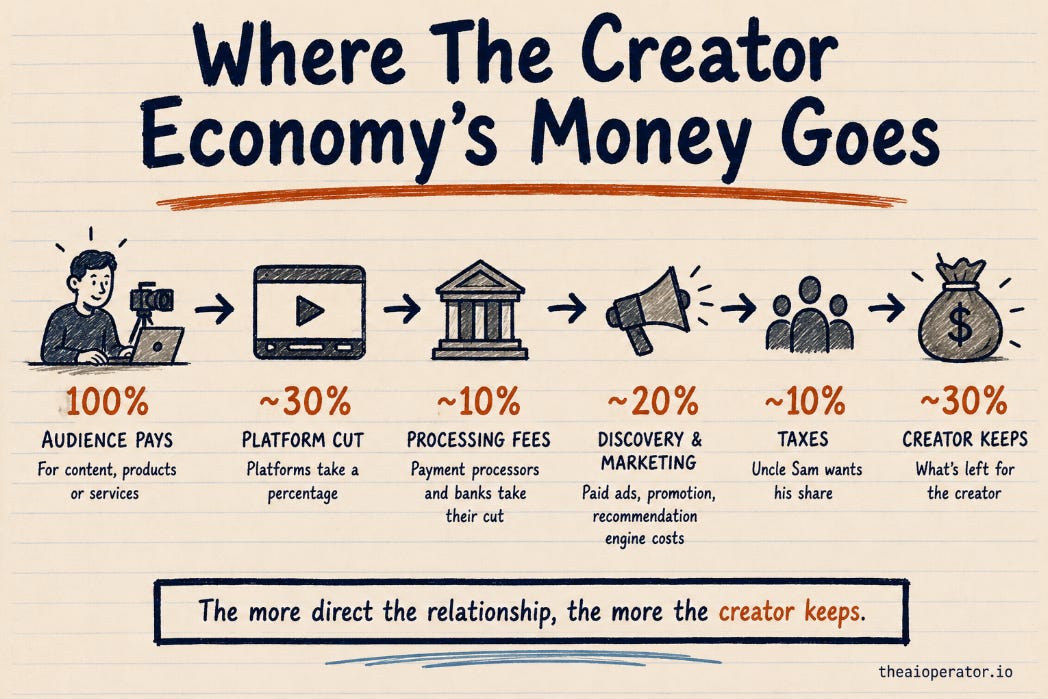
Two decades ago, making a living online meant stitching together ad pennies from a blog, a YouTube channel, or a handful of sponsorships. Today, the creator economy is a global force — a $250+ billion industry reshaping how people work, entertain, teach, and build influence.
But behind the explosion of content lies a harder truth: not all platforms reward creators equally.
Some platforms — like YouTube — have paid out tens of billions to creators over the years. Others, like TikTok, built empires on creator attention, offering only pennies per million views. Meanwhile, Substack reinvented the income model entirely, proving that small, loyal audiences can generate full-time earnings without relying on ads. And LinkedIn, once just a digital resume site, quietly became a new playground for professional creators — even if the direct payouts are still rare.
In this breakdown, we’ll go beyond the headlines and into the real data:
How the creator economy evolved from 2000 to 2025,
Where the money flows across platforms,
And what smart creators — and businesses — need to know next.
Let's follow the money.
Creator Economy Milestones: 2000–2025 Timeline
A Two-Decade Shift in How Creators Get Paid
In the early 2000s, the idea of individuals earning real money by sharing content online was barely a whisper. By the late 2010s, it became a roar. Platforms once seen as hobbies or side hustles became major economic engines, paying billions to creators worldwide.
The creator economy evolved through three distinct phases: the experimental era (2000–2010), the platform consolidation era (2010–2020), and the explosion and diversification era (2020–2025).
Key Milestones in the Creator Economy (2000–2025):
2005: YouTube launches, setting the foundation for online video creators.
2007: YouTube introduces the Partner Program, enabling ad revenue sharing with creators.
2013: Patreon launches, pioneering direct fan-funded creator income.
2017: Substack launches, offering subscription newsletters with direct payments.
2017–2018: TikTok expands globally, reshaping content around short-form viral video.
2020: TikTok Creator Fund ($1B over 3 years) announced — first attempt at systematic payouts.
2020–2021: Substack "boom": top writers start earning six/seven figures.
2021: LinkedIn Creator Mode launches and LinkedIn's $25M Creator Accelerator fund begins to nurture professional content creators.
2023: TikTok sunsets Creator Fund and launches Creativity Program Beta.
2024: YouTube Shorts ad revenue sharing kicks in — short-form creators finally earn at scale.
YouTube — The Monetization Gold Standard
How YouTube Set the Standard for Paying Creators
When it comes to creator earnings, YouTube set the blueprint.
Back in 2007, it launched the YouTube Partner Program (YPP), allowing creators to share in advertising revenue. It was the first time average internet users could consistently get paid for making content — not through sponsorships, but directly through the platform.
Since then, the numbers have been staggering.
From 2020 to 2023 alone, YouTube paid creators over $70 billion globally (YouTube Official Blog).
That’s more than most Hollywood studios grossed in the same period.
YouTube didn’t just pioneer monetization — it scaled it.
Today, over 3 million channels participate in YPP, and the platform keeps adding new earning methods:
Ads on videos (classic CPM model)
Super Chat and Super Stickers during live streams
Channel Memberships (monthly subscriptions)
Merchandise Shelf (integrated storefronts)
YouTube Shorts revenue sharing (since 2024)
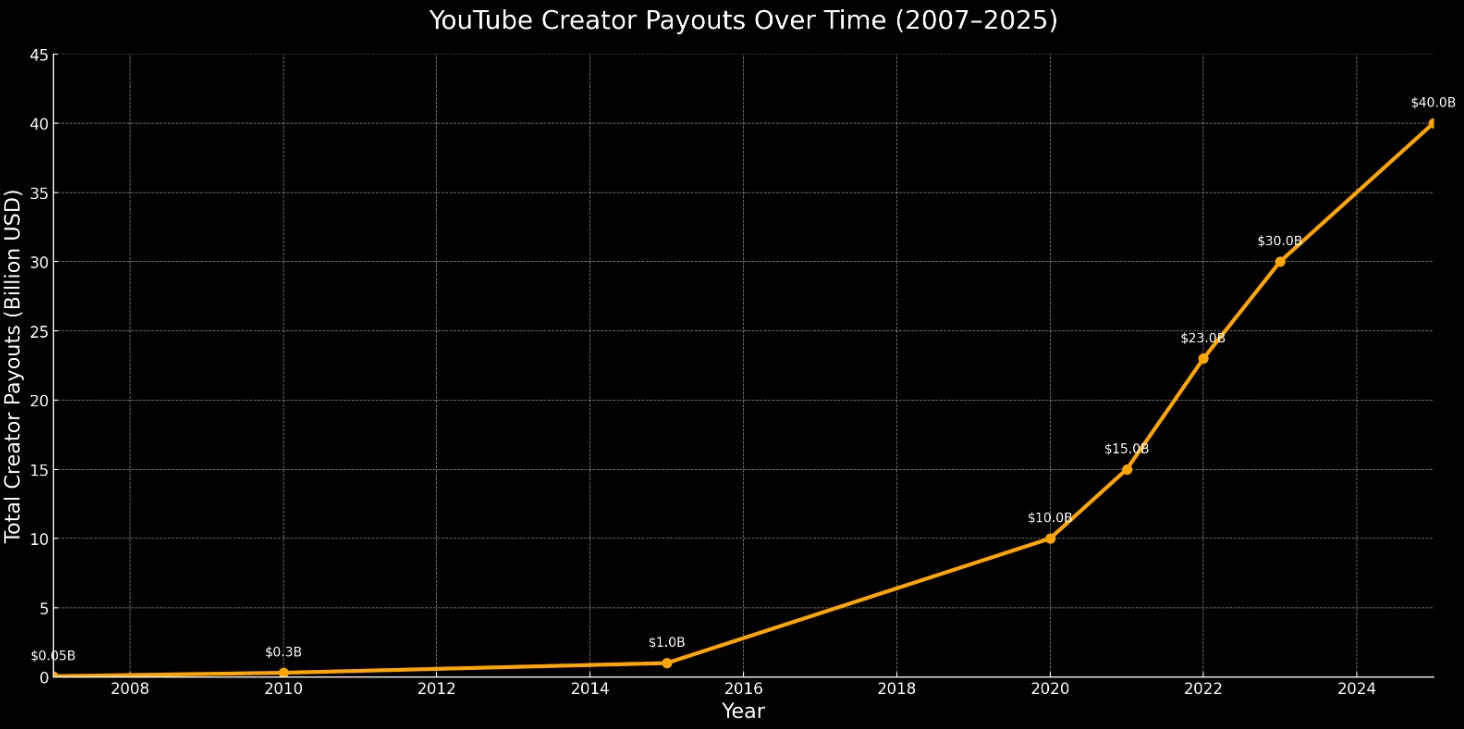
YouTube Earnings Model: Ads Rule, but Diversification Grows
YouTube’s bread and butter is still advertising revenue — simple CPM (cost per thousand views).
On average:
Long-form videos earn creators between $5–$10 per 1,000 views depending on niche, audience, and region (source).
Shorts (introduced revenue sharing in 2024) earn less per view, but payout scales are improving.
(Shorts CPM estimates vary, but early reports suggest $0.04–$0.06 per 1,000 views — better than TikTok's original payouts.)
Creators who diversify — using memberships, merch, live donations — often double or triple their earnings compared to relying on ads alone.
Key Facts:
YouTube Shorts payout system now works similar to TikTok’s, but backed by actual ad revenue sharing instead of a static fund.
A small channel (10,000–50,000 subs) can realistically earn $500–$2,500 per month if content is consistent and monetized well.
Top creators (1M+ subs) often diversify income streams across sponsorships, ads, memberships, and off-platform (Patreon, Substack, Courses).
Final Thought:
While newer platforms chase virality, YouTube remains the king when it comes to paying creators consistently.
It rewards time invested, audience loyalty, and format mastery — not just fleeting fame.
TikTok — Explosive Growth, Tiny Payouts (Until Now)
From Viral Fame to Monetization Frustration
TikTok exploded onto the global stage between 2017–2019, redefining social media around short-form video.
By 2020, it surpassed 1 billion users worldwide, making it one of the fastest-growing platforms in internet history.
But while creators flocked to TikTok for attention, earning real money proved much harder.
In 2020, TikTok launched the TikTok Creator Fund — a $1 billion promise to pay creators over three years.
It sounded revolutionary.
In reality, it quickly became clear: the payouts were tiny.
TikTok's Monetization Problem: Scale Without Revenue
The TikTok Creator Fund was a static pool — a limited pot split among a growing flood of creators.
As more creators joined, the earnings per view dropped dramatically.
Real-world creator reports showed:
Earnings around $0.02 to $0.04 per 1,000 views (source).
A viral video with 1 million views might earn a creator $20 to $40 — barely enough for dinner.
Compared to YouTube’s $5–$10 CPM, TikTok felt shockingly low in payout fairness.
2023–2025: TikTok's Course Correction
By late 2023, TikTok admitted the flaws.
The TikTok Creativity Program Beta replaced the old Fund.
Key changes:
Longer videos (>1 minute) are prioritized for better payouts.
Estimated CPM under the new model: $0.50–$1 per 1,000 views — a 10x–20x improvement over the old Fund.
TikTok Shop (e-commerce), TikTok Live (virtual gifting), and brand deals also grew as alternative revenue streams.
Key Facts:
TikTok is still attention-rich but revenue-poor compared to YouTube.
Monetization works best for creators who also sell products or build off-platform income (Patreon, Substack, Courses).
The new Creativity Program helps, but longer content is now key to real earnings.
Final Thought:
TikTok built the ultimate attention machine.
But for creators chasing money, not just views, the platform's payout game is still playing catch-up.
Substack — The Paid Subscription Revolution
How Substack Flipped the Creator Economy
When Substack launched in 2017, it seemed simple:
→ Let writers email their audience directly.
→ Let writers charge for that access.
→ Cut out advertisers and platform algorithms entirely.
The result?
Substack sparked a direct-to-audience revolution that changed how creators monetize online.
While YouTube and TikTok monetize views, Substack monetizes trust.
The difference is massive — and profitable.
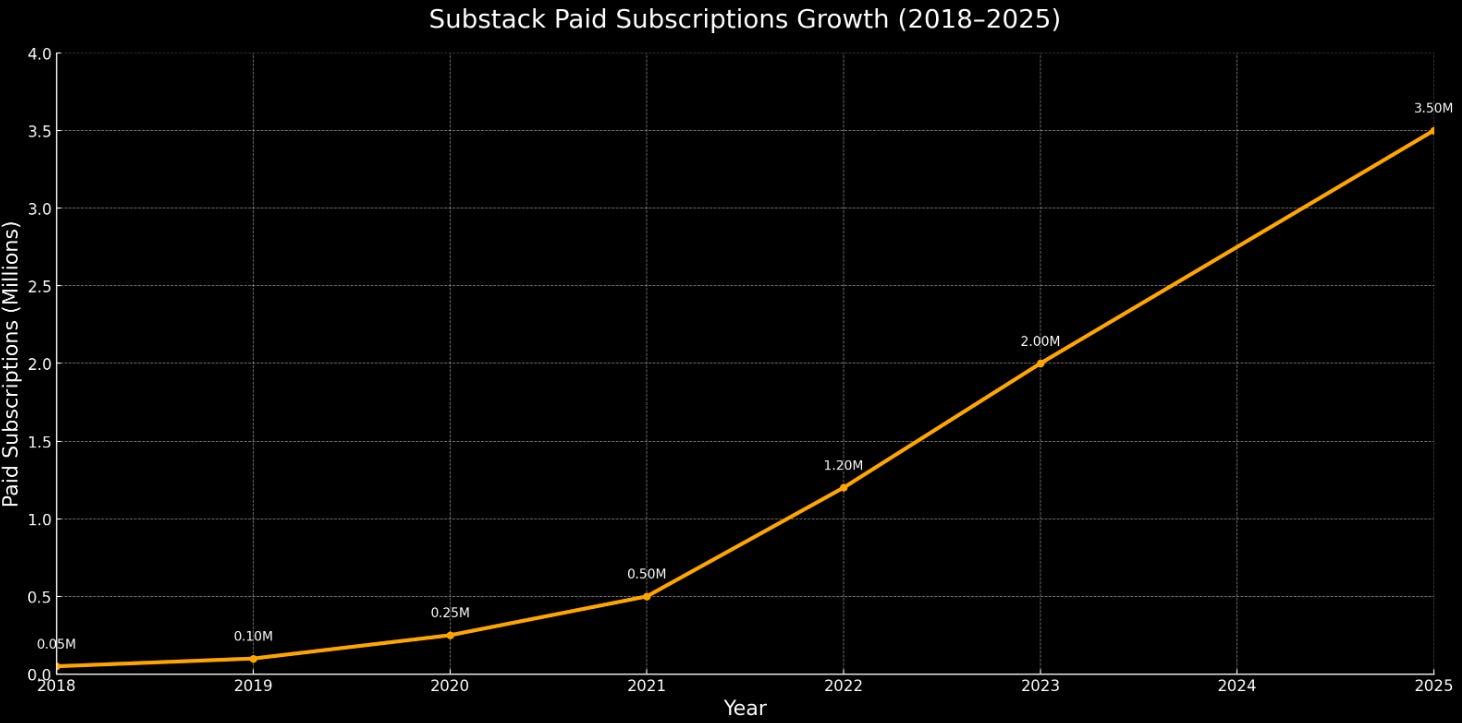
Substack’s Subscription Model: Small Audience, Big Earnings
Substack’s model is simple but powerful:
Writers keep 90% of their subscription revenue (10% goes to Substack).
Most subscriptions cost readers $5–$10 per month.
A creator doesn’t need millions of readers — 1,000 true fans can generate full-time income.
Example:
1,000 subscribers paying $8/month = $8,000/month gross (~$7,200 after fees).
By 2023:
Substack crossed 2 million paid subscriptions platform-wide (source).
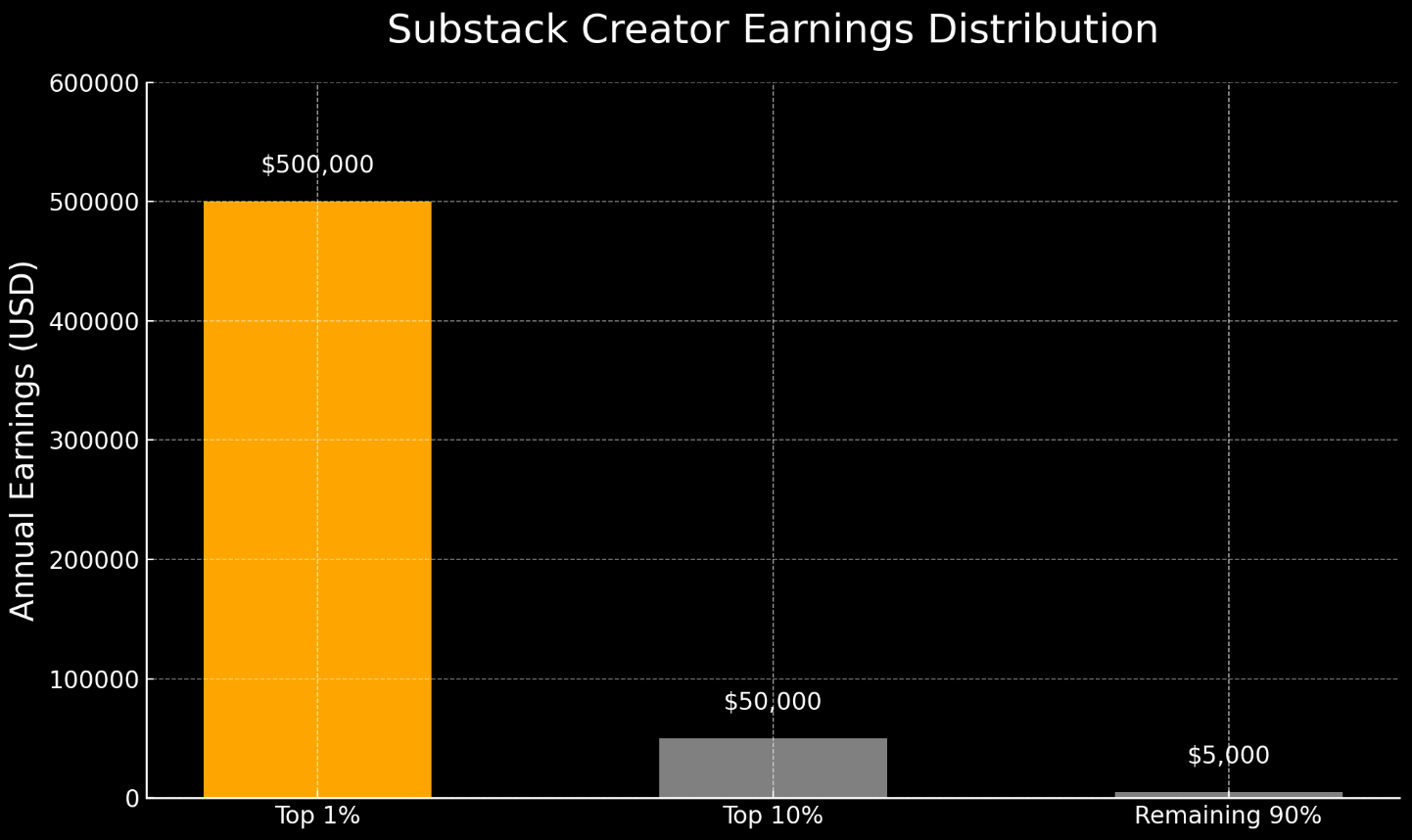
Top writers (the elite ~0.1%) earned $250,000–$1M+ annually.
Substack also launched features like:
Substack Chat (private group chats with paying readers)
Substack Notes (short-form social posts inside Substack)
All designed to keep readers inside the Substack ecosystem — and creators earning.
Key Facts:
Substack creators own their mailing list — critical for long-term brand building.
Income is much more stable than ad-based models — subscriptions = recurring revenue.
However, Substack success skews elite-heavy — most writers earn modestly unless they have a strong niche.
Final Thought:
Substack proved that small, loyal audiences beat viral view counts — if you offer real value.
In the subscription era, creators are not just chasing clicks anymore.
They’re building tribes.
LinkedIn — Indirect Monetization and Professional Leverage
LinkedIn: The Creator Platform You Didn’t Expect
When people hear "creator economy," LinkedIn isn’t the first platform that comes to mind.
But in the 2020s, LinkedIn quietly became one of the most powerful creator tools — just with a very different business model.
Instead of paying creators directly through ads or subscriptions, LinkedIn creators earn indirectly:
→ Through jobs, consulting deals, partnerships, speaking gigs, and authority building.
In short:
No ad revenue checks. Big off-platform paydays.
How LinkedIn’s Creator Ecosystem Works
Starting in 2021, LinkedIn made a serious push into the creator world:
Launched Creator Mode (turns a LinkedIn profile into a content hub)
Announced a $25M Creator Accelerator Program (grants, not payouts)
But even today:
No direct ad revenue sharing for posts
No native subscription options (like Substack/YouTube)
Instead, LinkedIn content leads to:
Personal brand growth
Higher visibility inside professional circles
Direct inbound opportunities (job offers, client leads)
Key Facts:
Over 2 million LinkedIn users had activated Creator Mode by 2022.
Content engagement on LinkedIn rose by +44% year-over-year around 2023 (source).
Top LinkedIn creators routinely credit the platform for 6-figure consulting deals, paid keynote invites, and high-paying job offers — even though LinkedIn never sends them a check.
Final Thought:
LinkedIn isn’t the platform for quick payouts.
But for serious professionals building long-term authority and business, it’s arguably the most valuable creator platform today — if you know how to leverage it.
Conclusion: Where the Creator Economy’s Money Really Moves
Twenty years ago, being a "creator" meant uploading videos for free or blogging for pennies.
Today, it's a multi-billion-dollar global economy — but not all platforms reward creators equally.
Here’s the real breakdown:
YouTube remains the gold standard: consistent, high payouts tied to real ad revenue.
TikTok built insane attention, but still struggles to pay creators fairly (even after the Creativity Program shift).
Substack proves that smaller audiences can generate bigger, steadier income through loyalty and subscriptions.
LinkedIn flips the model completely — no direct payouts, but huge off-platform business opportunities for smart creators.
The lesson is simple:
Platforms control the rules. Smart creators control the strategy.
The creator economy isn’t just about posting.
It’s about understanding where your effort translates into real income — and building your brand across multiple ecosystems.
5 Key Takeaways:
Attention ≠ Money: Massive views don’t automatically mean massive income. Platform payout models matter more than follower counts.
Diversification Wins: Top creators don’t rely on one platform. They build multi-channel ecosystems: YouTube + TikTok + Substack + LinkedIn = Maximum leverage.
Audience Quality > Audience Size: 1,000 true fans can be worth more than 1 million passive scrollers.
Platforms Are Evolving: YouTube, TikTok, and LinkedIn are still tweaking their creator economies — staying adaptable is survival.
Ownership Matters: Substack shows that owning your email list and audience is one of the smartest long-term moves a creator can make.
Final Word:
The creator economy isn't slowing down. It's leveling up.
The next generation of successful creators won’t just be content machines —
they’ll be strategists, entrepreneurs, and brand builders.
The money is there.
Now it’s about knowing where — and how — to follow it.
Enjoyed this deep dive?
Subscribe to Azor Data for more data-driven breakdowns on how creators, businesses, and platforms are shaping the future economy — with the numbers to back it up.