


TL;DR
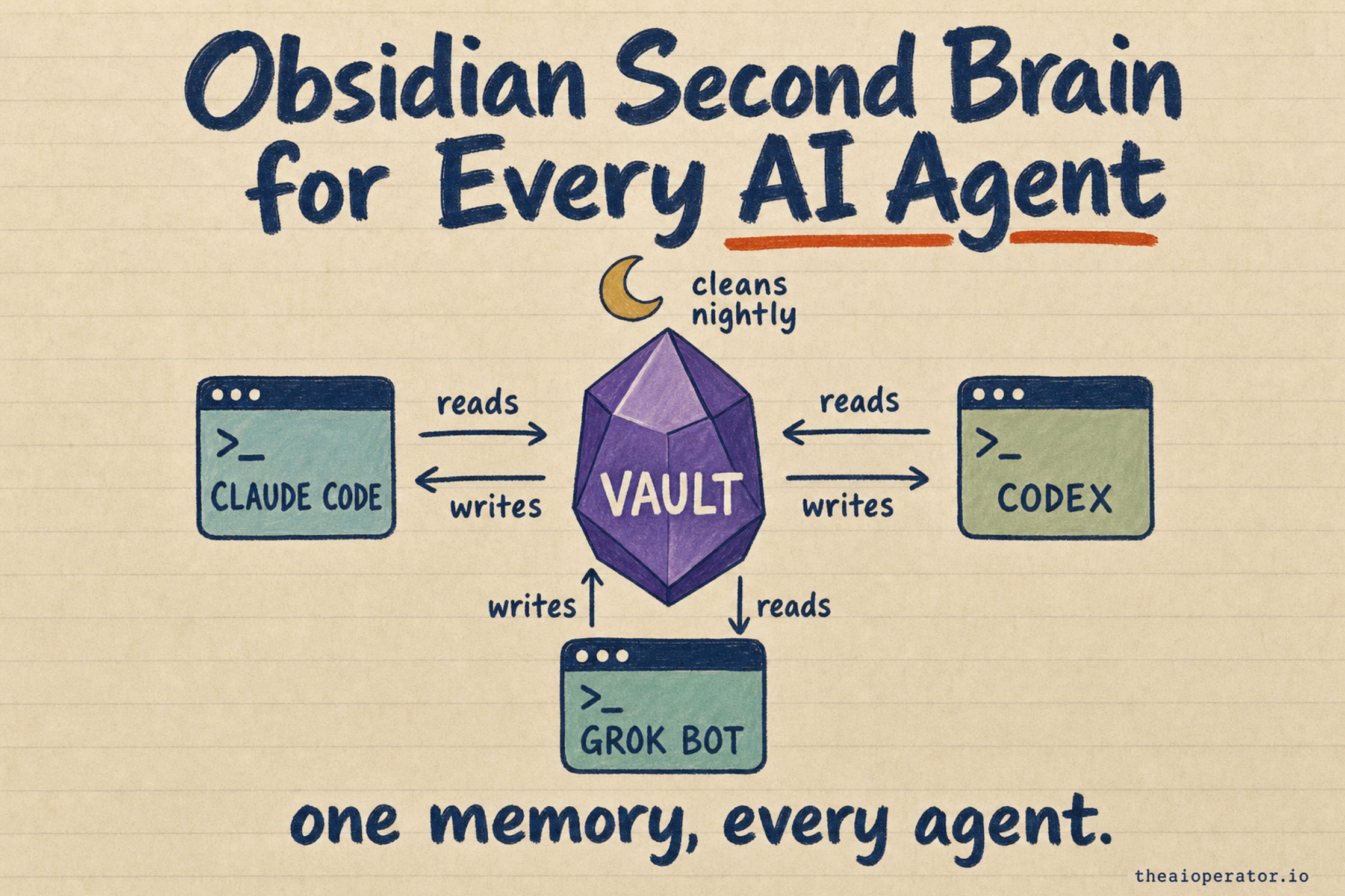
obsidian-second-brain is an open-source skill that turns an Obsidian vault of plain markdown files into shared memory for AI agents. One codebase builds for 8 agents, including Claude Code, Codex and Grok Bot. You install it in about 5 minutes and start with three commands: init, save and find. A nightly agent keeps the notes clean.
obsidian-second-brain turns one Obsidian vault into shared memory for Claude Code, Codex, Grok Bot and 5 more agents.
You install it in 5 minutes, then use three commands: init, save and find.
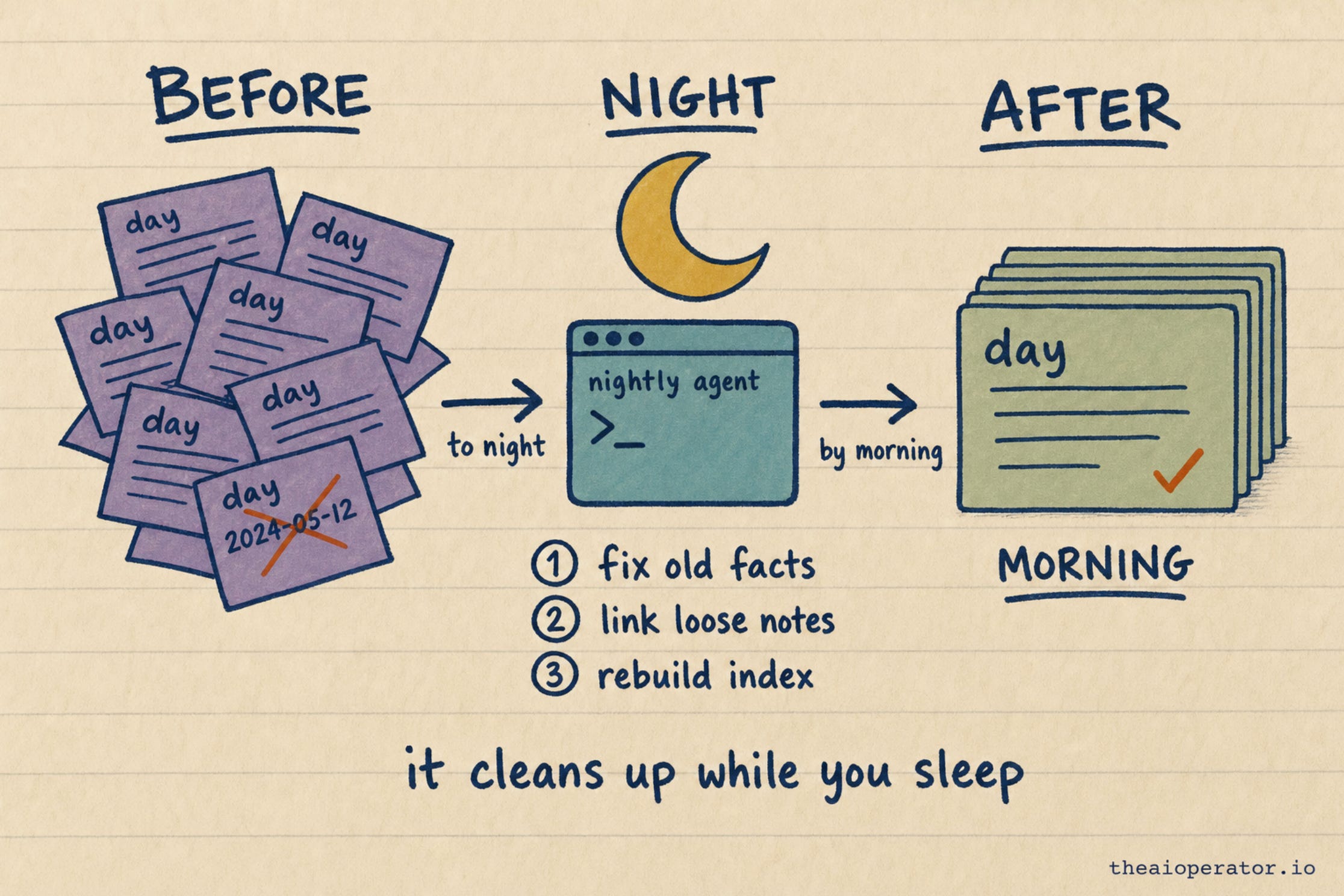
Every night an agent fixes old facts, links loose notes and rebuilds the index, so every session starts clean.
Last updated: October 14, 2026. This is the living manual. Every new feature lands here first.
Every AI agent forgets you when the session ends. Your projects, your decisions, the people you work with. Gone, and you explain it all again tomorrow.
For a team, that costs hours a week in repeated context. It also means the same bad call gets made twice, because nobody wrote down why it failed.
I built obsidian-second-brain to fix that for myself. Over 4,700 developers have starred it since. This post is the whole manual: what it is, which agents it works with, how to install it and what each part does.
What obsidian-second-brain is
It’s an open-source skill that turns an Obsidian vault into memory your AI agents read and write. A skill is a set of instructions and scripts an agent loads to do a job.
The vault is plain markdown files on your disk. No database, no cloud account, no lock-in. If you stop using the skill, your notes stay readable.
It started from Andrej Karpathy’s LLM Wiki pattern, where an AI keeps a wiki for you. This skill takes the idea further in one direction: a new source rewrites the pages it touches instead of adding a new page next to them. I wrote about why in Claude Code as a Second Brain: What the Tutorials Skip.
Which AI agents it works with
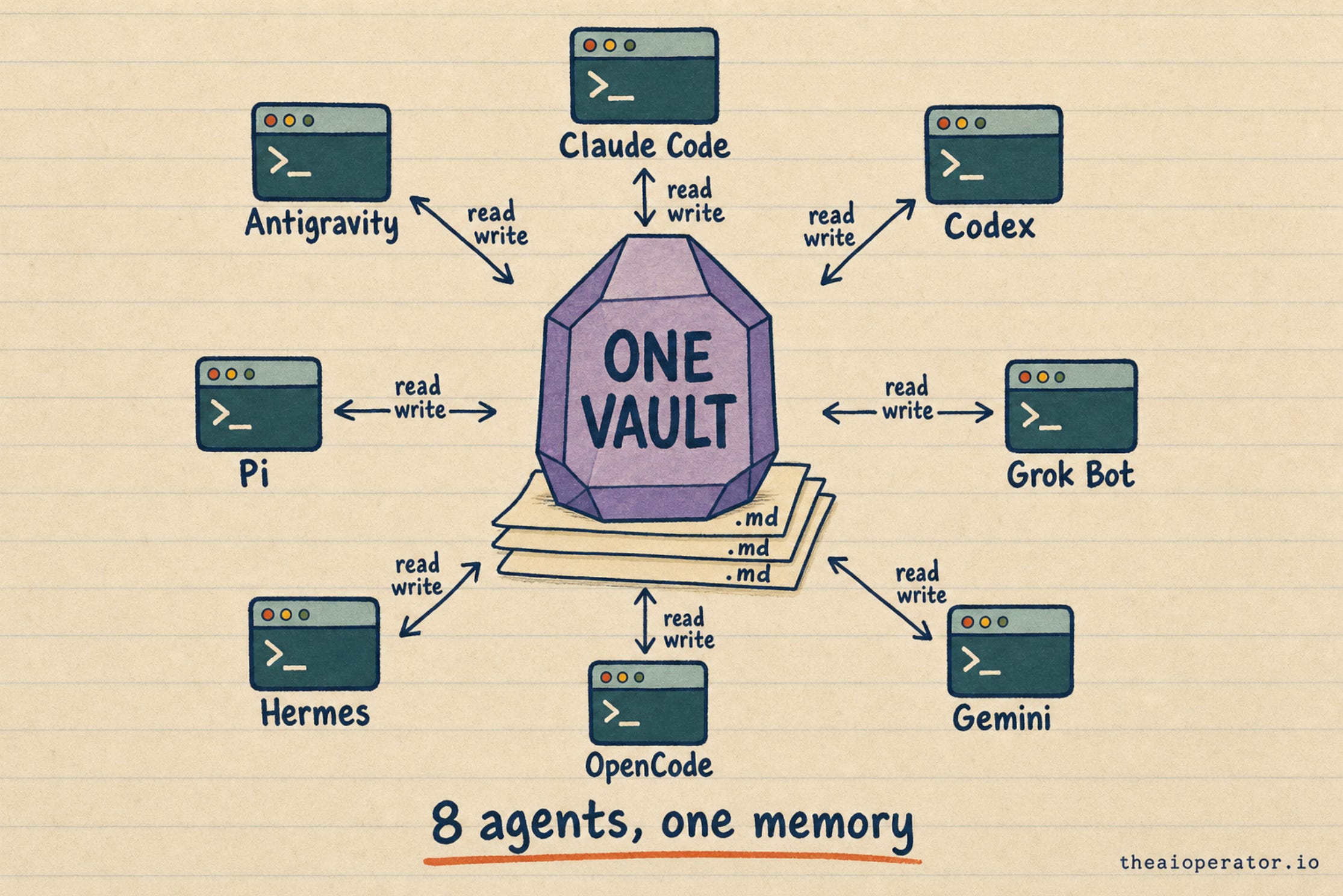
One codebase compiles into 8 builds. The vault behaves the same in all of them. Only the install path changes.
Claude Code, the default, installed as a plugin.
Codex CLI, OpenAI’s coding agent.
Grok Bot, xAI’s AI teammate (not the Grok chat app).
Gemini CLI, Google’s command-line agent.
OpenCode, the open-source coding agent.
Hermes, Nous Research’s agent.
Pi, the Pi coding agent.
Agent Skills, the open standard that Antigravity, Codex, OpenCode and GitHub Copilot CLI all read.
Each build is checked in CI on every push. CI means the automatic tests that run on every change.
The repo also ships an MCP server. MCP is the standard way AI apps plug into outside tools. Any MCP client, such as Claude Desktop or Cursor, can search, read and save notes through it.
I run my own vault across several of these at once. Notes one agent writes, the next one reads. More on that in I Run My Second Brain on Four AI CLIs.
How to install it in 5 minutes
To install obsidian-second-brain in Claude Code, run /plugin marketplace add eugeniughelbur/obsidian-second-brain, then /plugin install obsidian-second-brain@obsidian-second-brain. Set OBSIDIAN_VAULT_PATH to your vault folder, restart, and run /obsidian-second-brain:obsidian-init. Init asks for a preset: developer, founder or operator, writer, or researcher.
For Claude Code:
Open any Claude Code session.
Run
/plugin marketplace add eugeniughelbur/obsidian-second-brain.Run
/plugin install obsidian-second-brain@obsidian-second-brain.Set
OBSIDIAN_VAULT_PATHto your vault folder in your Claude Code settings.Restart, then run
/obsidian-second-brain:obsidian-initinside the vault.
Init asks which preset fits you: developer, founder or operator, writer, or researcher. It builds the folders and the vault manual from that answer.
The other builds have their own install section in the README. Windows works the same as macOS and Linux since v0.15.
The three commands to start with
The skill ships 47 commands. You need three on day one:
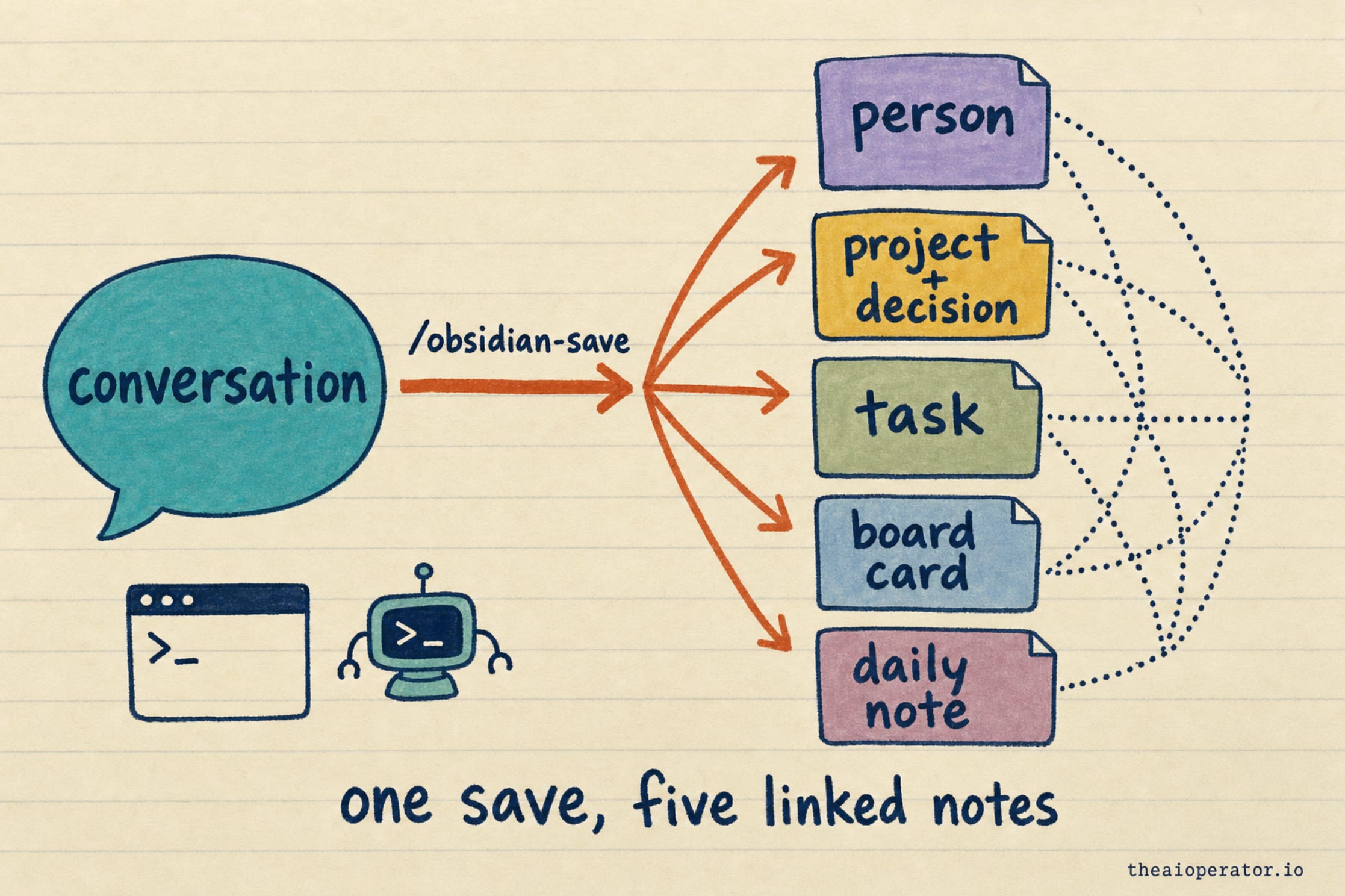
/obsidian-initsets up the vault and writes its operating manual./obsidian-savepulls every decision, person, task and idea out of the conversation and files each one in the right note./obsidian-findsearches the vault and answers with context, not only file names.
One /obsidian-save after a meeting writes about five linked notes: the person, the project with the decision, the task, the board card and the daily note. You never open Obsidian to do it.
What happens while you sleep
Four scheduled agents maintain the vault: a morning brief, a nightly cleanup, a weekly review and a health check. The nightly cleanup runs five steps. It closes the day, fixes contradictions, finds patterns, links orphan notes and rebuilds the index. The next session then starts from clean notes instead of a pile.
Four agents run on a schedule:
Morning brief pulls your calendar, overdue tasks and overnight changes into today’s note.
Nightly cleanup runs five steps: closes the day, fixes contradictions, finds patterns across sources, links orphan notes and rebuilds the index.
Weekly review summarizes the week from the vault’s own history.
Health check flags duplicates, broken links and stale claims.
Devin from Cognition added a nightly memory cleanup in October 2026 and called it Dreaming. This vault has run one since April. The effect is the same: the next session starts from clean notes, not a pile.
How it learns from what you read
/obsidian-ingest takes a URL, PDF, voice memo or screenshot. It doesn’t write one summary note. It updates the 5 to 15 pages the source touches: people, projects, concepts and the claims that changed.
Seven research commands feed the vault:
/researchand/research-deepfor sourced web research, vault first./x-readand/x-pulsefor X posts and what’s trending./youtubeand/podcastfor transcripts and summaries./notebooklmfor answers grounded only in your own notes.
Every finding saves to the vault, so you never research the same thing twice.
Tools that argue with you
A second brain that only agrees with you is a diary. These commands push back:
/obsidian-challengefinds your past failures on the same topic before a big decision./obsidian-emergesurfaces patterns from the last 30 days you never named./obsidian-reconcilefinds notes that contradict each other and resolves them./obsidian-brainstorminterviews you one question at a time until an idea is sharp.
Why the notes are written for agents
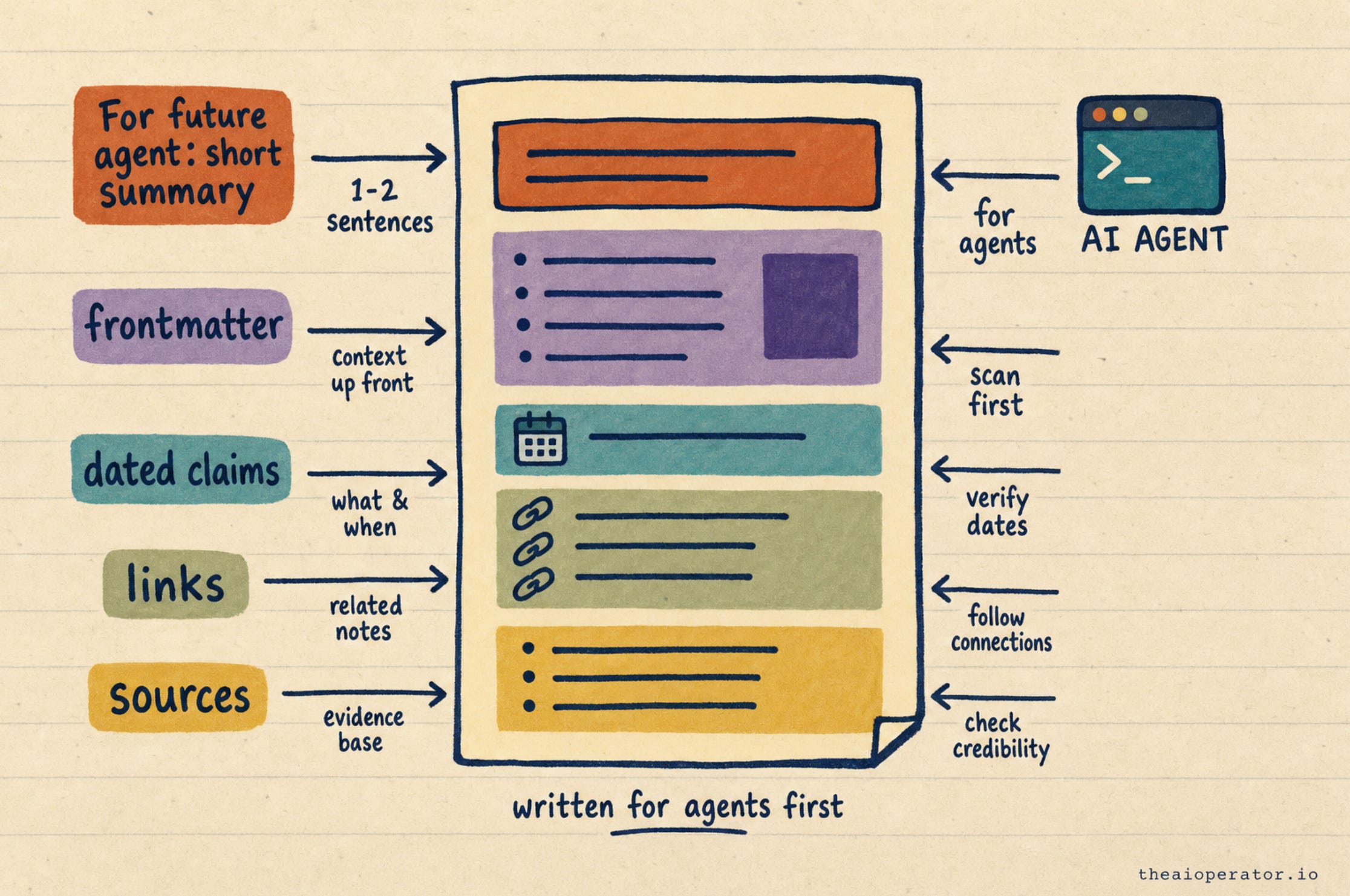
Every note follows the AI-first rule. It opens with a short “For future agent” summary, then frontmatter, dates on every claim, links and sources. Agents read the summary first and skip the rest when it doesn’t apply.
Facts carry two dates: when they were true and when the vault learned them. So an old fact doesn’t overwrite a new one by accident. A file called CRITICAL_FACTS.md loads who you are in about 120 tokens at the start of every session.
This is why you don’t need a vector database. I explained the trade-off in How I gave Claude Code memory without a vector DB.
What’s new
This section changes with each release:
October 2026 (in progress): German commands, CI on Windows, company and tool notes count as entities in search.
v0.17, The Neighbors (September 26): the skill now knows when another Obsidian plugin writes to the same vault, and says whose rules apply.
v0.16, The Silent Failure (September 15): checks that stayed quiet when something broke now speak up.
v0.15, The Port (September): full Windows support, contributed across two pull requests.
The project has 18+ outside contributors and a test suite of over 700 tests that runs on every change.
For the full picture, read the complete guide to agent memory: what Claude remembers, why agents forget, and one memory 8 agents can share.
Frequently asked questions
What is an Obsidian second brain?
It’s an Obsidian vault an AI agent keeps for you. The agent saves decisions, people and research into linked notes and reads them back in later sessions.
Does obsidian-second-brain work without Claude Code?
Yes. It has builds for Codex CLI, Grok Bot, Gemini CLI, OpenCode, Hermes, Pi and any Agent Skills tool like Antigravity. MCP clients such as Cursor connect through its MCP server.
Is obsidian-second-brain free?
Yes. It’s MIT licensed. The core vault commands need no API keys. Research commands use your own Perplexity, Grok or Gemini keys if you add them.
Do I need a vector database for AI memory in Obsidian?
No. The vault uses plain markdown, links, frontmatter and a rebuilt index. Agents find notes by search and links.
How do I give Claude Code persistent memory?
Install the plugin, point OBSIDIAN_VAULT_PATH at your vault and run /obsidian-init. Every session then loads the vault’s manual and critical facts at start.
Does it work on Windows?
Yes. Since v0.15 it handles Windows paths, line endings and encodings the same as macOS and Linux.
Key takeaways
One Obsidian vault can serve as shared memory for 8 agent builds plus any MCP client.
Plain markdown beats a database for personal AI memory: readable, portable and free.
A nightly cleanup agent keeps memory useful by fixing old facts and linking loose notes.
New sources should rewrite existing pages, not pile new ones on top.
Notes written for agents load faster: a short summary first, then dated claims and sources.
Three commands cover day one: init, save and find.
Further reading
obsidian-second-brain on GitHub, the repo, install guides and changelog.
I built a tool that lets my Obsidian vault argue with me, on the thinking tools.
HUGE update on obsidian-second-brain: The Architect, documenting a codebase into the vault.
Karpathy’s LLM Wiki gist, the pattern this project grew from.
Agent Skills standard, the format Antigravity and others read.
About the author
I'm Eugeniu Ghelbur, an AI Automation Engineer working on agent memory. I built obsidian-second-brain, an open-source memory layer that 8 AI agents can share. It's MIT-licensed and starred by over 5,400 people on GitHub. I write The AI Operator.
Good to see the explicit yes gate on rewrites, that’s the part most of these setups skip. I split agent work the same way on my end: read and draft are cheap and can run loose, the actual change is the only step that needs a stop rule, because it’s the only one a bad run can’t just quietly undo.
One new source rewriting 5 to 15 pages means one wrong claim lands in 15 places. The nightly step that fixes contradictions is the one I'd check first. Does it leave a diff of what it changed, or just overwrite?