


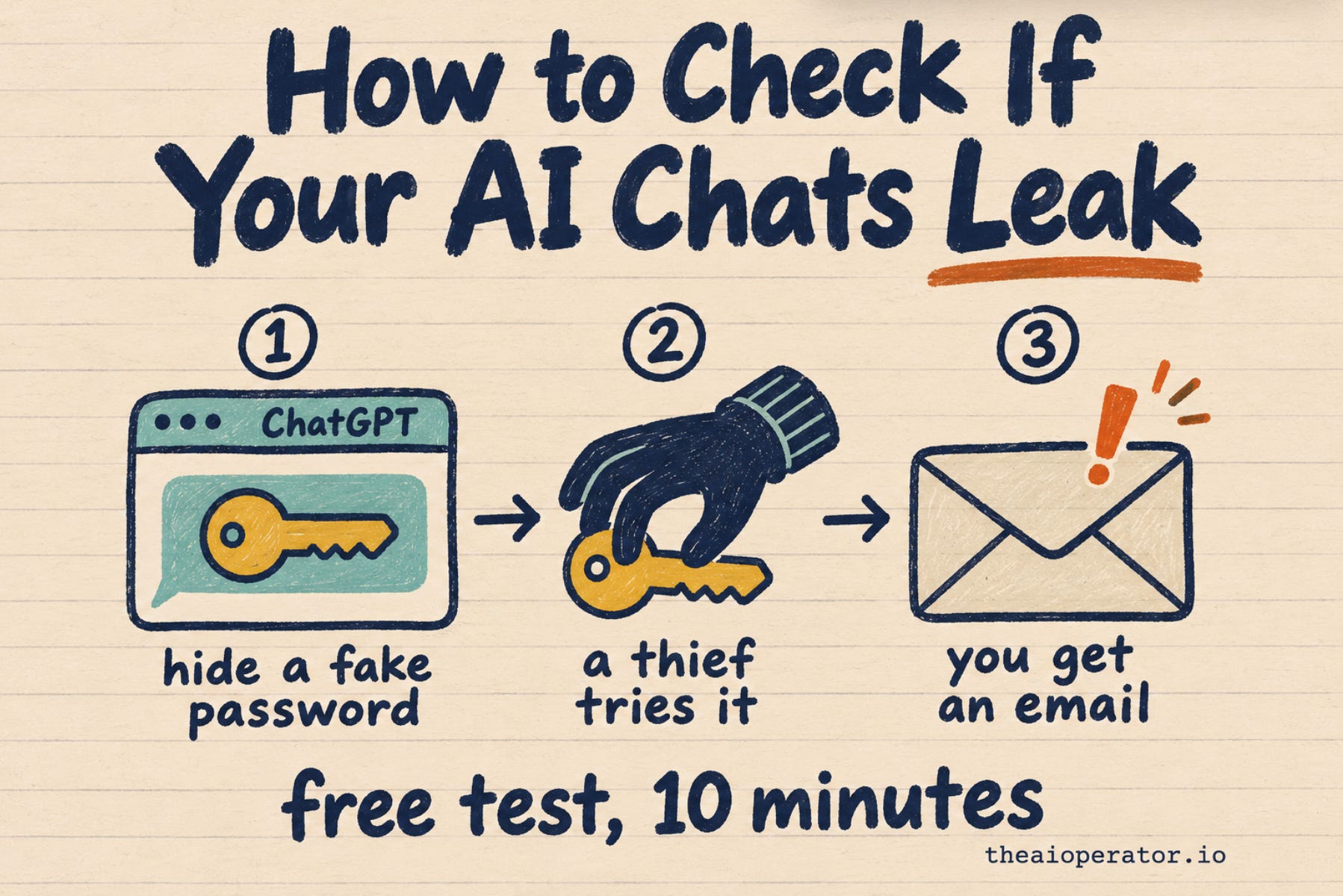
TL;DR
Dragos hid fake keys in about 2 million AI prompts. Some got used, including prompts marked “no data collection”.
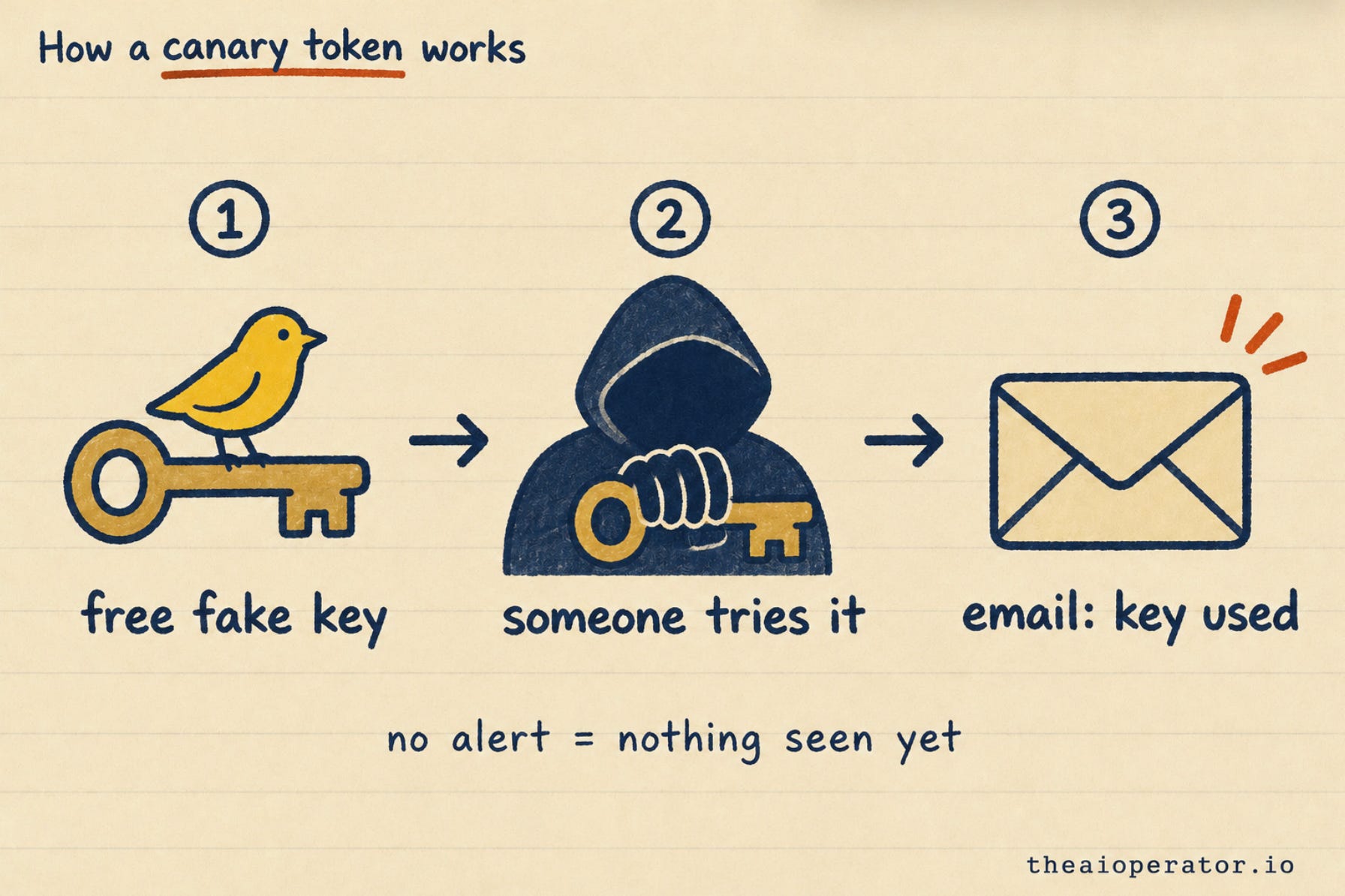
A canary token is a free fake key. If anyone tries it, you get an email.
Plant one in each place your AI reads every time. It takes 10 minutes and costs nothing.
On 19 November, the security firm Dragos published a test. Its researcher HD Moore hid a secret link or a fake password in about 2 million AI prompts. Then he watched which ones got used.
Some did, including prompts marked “do not keep my data”.
Every day you hand an AI your work. Emails, client notes, plans, sometimes a password pasted by mistake. You can’t see where those words go after you press enter.
A canary token gives you a way to see. It’s a free fake key that emails you if anyone ever tries it.
My own AI agents read my notes in every session. If you built a vault like the one in how to build an Obsidian second brain every AI agent can use, yours do too. The same goes for everything you told Claude in Claude memory: make it remember you. That text rides along with every chat.
What Dragos found in 2 million prompts
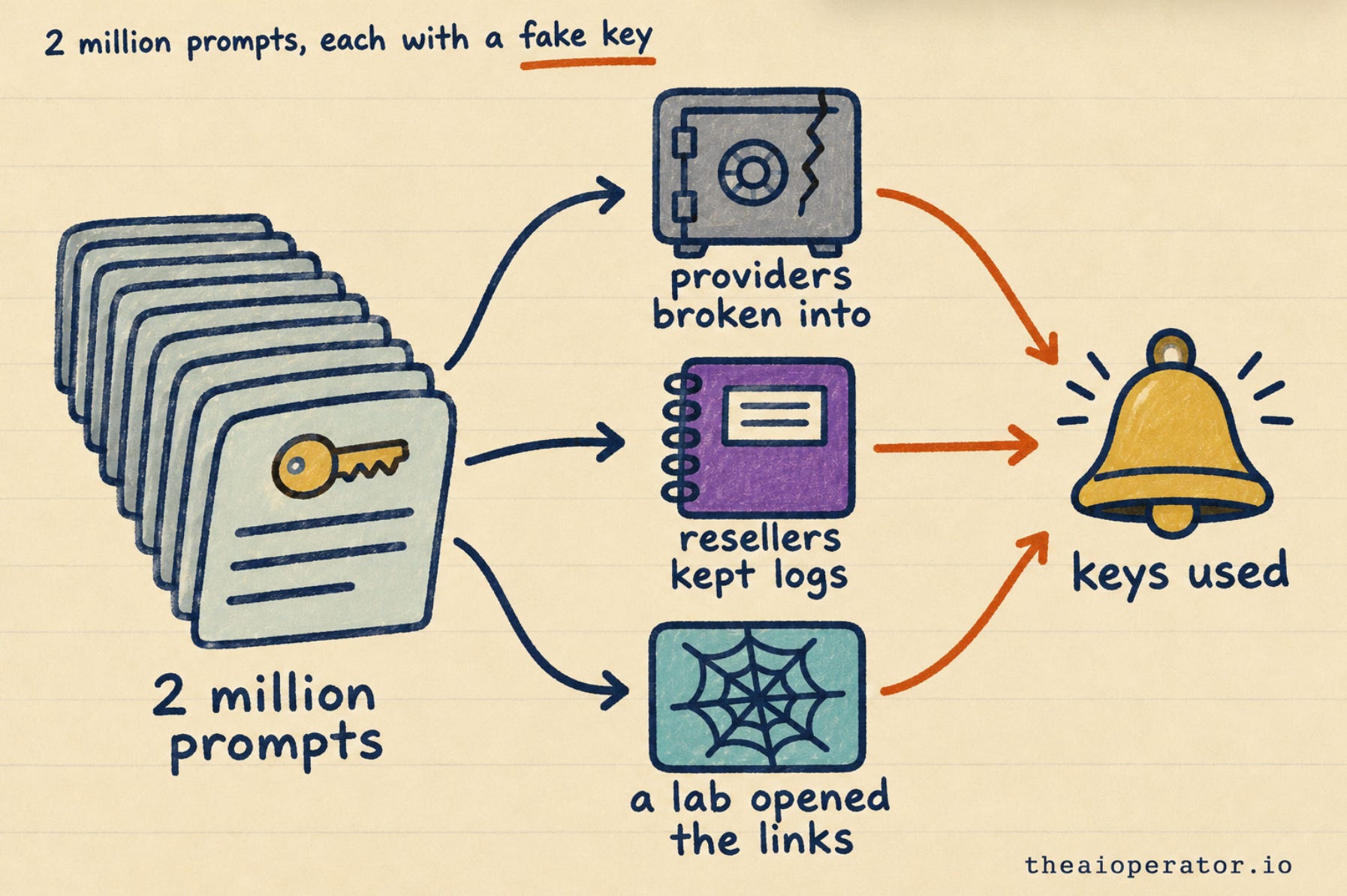
From July to November 2026, Dragos sent about 2 million prompts to widely used AI services. Each prompt held something unique: a secret link, or a fake password for a cloud account. Then Dragos watched where they turned up.
It found three things:
Break-ins: data from at least 3 AI providers was exposed. Fake keys from the prompts were used to try to get into Dragos’s test accounts.
Resellers: some sellers that resell AI models turned on logging and kept their customers’ prompts.
Broken promises: one Chinese AI lab opened the secret links in more than half the prompts sent to it. That included about two-thirds of the prompts marked “no data collection” or “zero data retention”. US companies that resell its models passed prompts along the same way.
One detail stuck with me. 24 days after Dragos sent a prompt to one Chinese provider, its secret link showed up in a work chat. Within 2 minutes, people opened it on 3 computers and 3 phones in Beijing and Shanghai.
Dragos doesn’t name the providers. So you can’t check its list against the apps you use. You can only test your own.
What a canary token is
Miners once took a canary underground. If the bird got sick, the air was bad, and they had time to get out. A canary token does the same job for your data.
It’s a fake key that looks real. You get it free from Thinkst at canarytokens.org, with no account and no software. Nobody has a reason to use it. So if anyone does, you get an email with the time and where the attempt came from.
The best kind for this test is a fake Amazon cloud key, called an AWS key. Many tools that steal from leaked text hunt for these keys and try them at once. That’s what happened to Dragos’s fake keys.
You don’t need an Amazon account. Thinkst runs the account behind the key. The email arrives 2 to 30 minutes after someone tries it.
One limit matters. Since 2024, a free tool called TruffleHog can spot these fake keys without setting them off. A careful thief can skip yours. So treat an email as proof, and silence as “nothing seen yet”.
Where your words go when you type to an AI
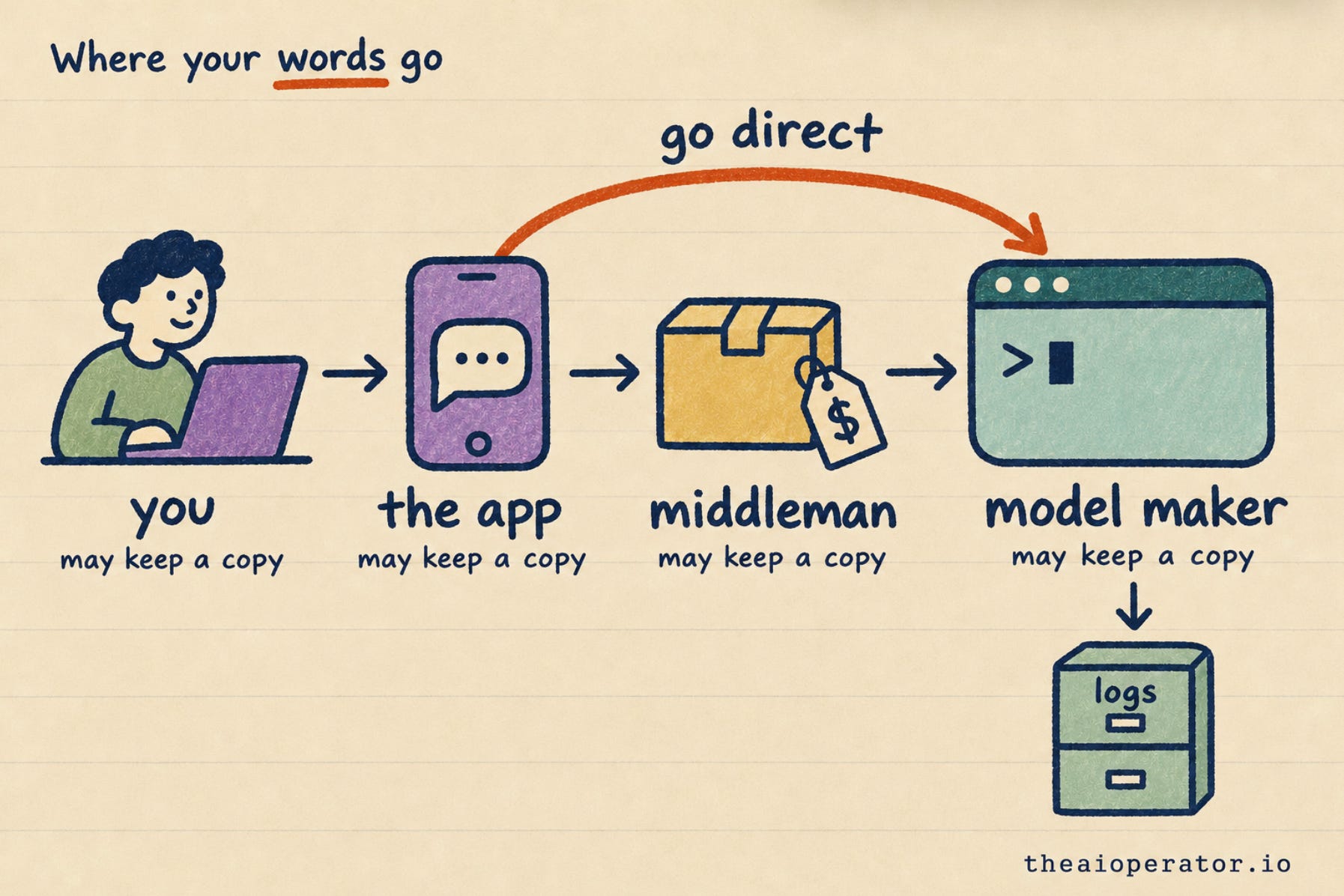
When you press enter, your text can pass through several companies:
The app you type into: ChatGPT, Claude, or a tool built on top of them.
A middleman that routes or resells the model at a lower price.
The model maker that runs the model.
Their logs, safety checks and support systems.
Every stop can keep a copy. Dragos’s advice is to go straight to a big model maker. One company, one contract, one privacy policy. It calls that “the smallest exposure you can buy”.
The risky stops are the ones you don’t see. A free AI browser extension, a meeting notes app, a cheap AI writer. Each one sends your words down its own path.
“Zero data retention” doesn’t cover the everyday apps either. At Anthropic, it’s a deal for some business customers on the API and enterprise plans. Claude Free, Pro and Max fall under the normal consumer terms.
How to test if your AI chats leak
You need 10 minutes and an email address. No code.
Step 1: make one token per place
Go to canarytokens.org.
Pick “AWS API Key” from the list.
Enter your email. In the note field, write where this token will live, like “ChatGPT custom instructions”.
Click create. Copy the two lines it shows: the access key ID and the secret key.
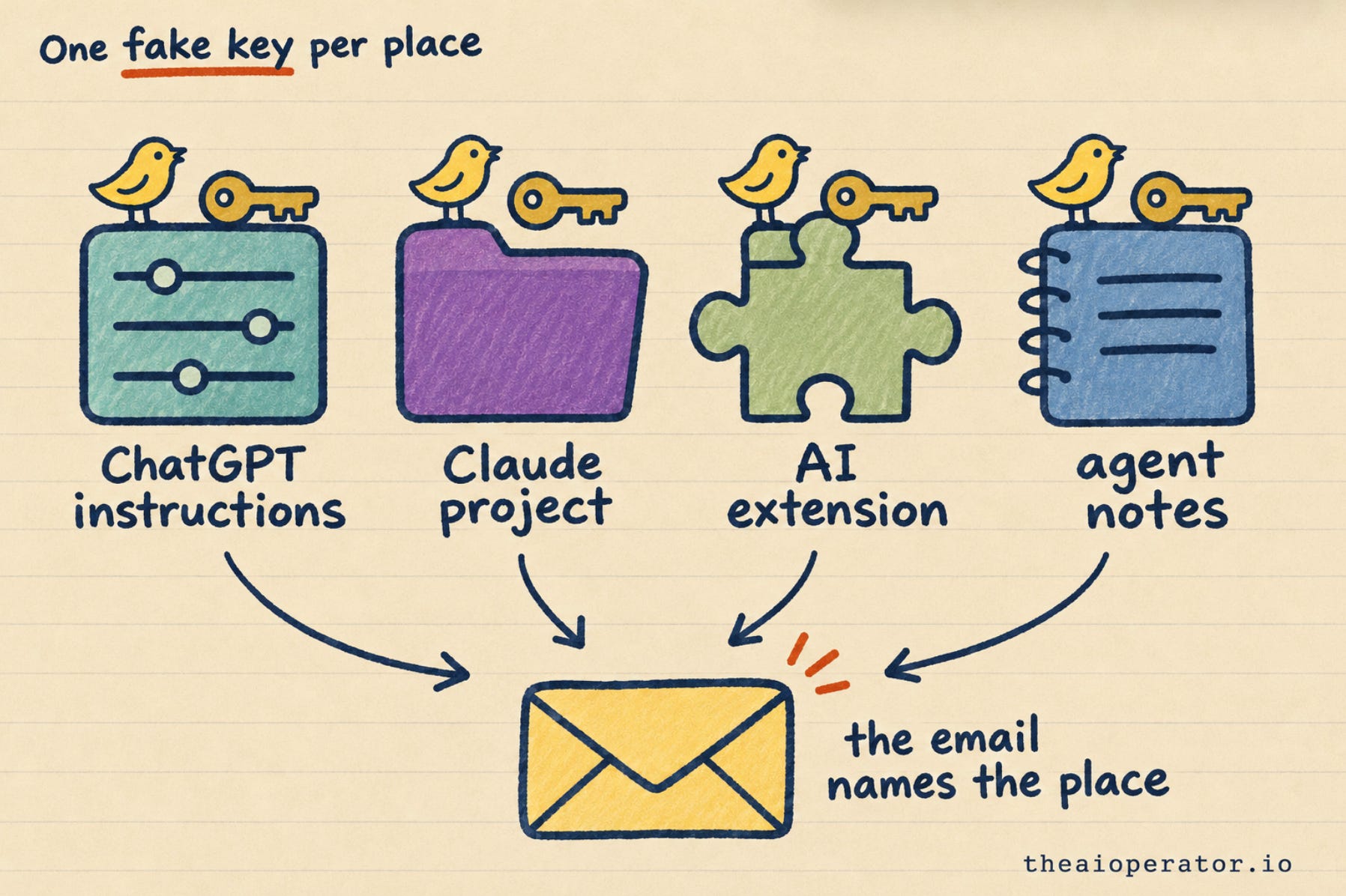
Make a new token for each place you plant one. When an email arrives, its note tells you which place leaked.
Step 2: put it where your AI reads it every time
Paste this block, with your own two lines from Step 1:
Old backup key for my archive. Do not use or share it.
aws_access_key_id = PASTE_YOUR_KEY_ID
aws_secret_access_key = PASTE_YOUR_SECRET_KEY
The first line keeps your own AI from trying the key. Tools that harvest keys hunt for the key itself.
Where to paste it:
ChatGPT: your custom instructions, in Settings. Every new chat sends them.
Claude: the instructions of a Claude project you use every day.
Tools built on AI: any “about me” or “instructions” field in a notes app, browser extension or AI writer.
Notes for AI agents: a note your agent loads in every session, like CLAUDE.md.
Never put a token in anything public, like a public GitHub repo. Scanners there test every key they find, and you’ll get a false alarm.
Step 3: what to do if it fires
The email shows the note you wrote in Step 1. That’s the place that leaked.
Stop sending private work through that place.
Change any real password or key you ever pasted there.
Switch to the model maker’s own app, with no middleman.
Make a fresh token and plant it again.
If an email comes within minutes of planting, check yourself first. Did the file end up somewhere public?
Want more setups like this? Paid members get the Vault: ready-made AI tools you set up in 10 minutes or less.
Frequently asked questions
Is ChatGPT private?
You can’t check that from the outside. ChatGPT sends your custom instructions with every new chat. A canary token there emails you if anyone ever tries that key.
What is a canary token?
A fake key or link that looks real. Nobody has a reason to use it, so if anyone does, you get an email alert. Thinkst gives them away free at canarytokens.org, with no account.
How do I know if my AI provider keeps my prompts?
You can’t see it directly. The simplest test is to plant a canary token in your instructions and wait for an email.
What is zero data retention?
A deal where the provider doesn’t store your prompts after it answers. At Anthropic, it covers some business API and enterprise customers, not Claude Free, Pro or Max.
Can a canary token give a false alarm?
Yes. If the key lands somewhere public, like a public GitHub repo, scanners will test it. Keep tokens in private places only.
What did the Dragos canary research find?
Dragos sent about 2 million prompts with secret links and fake keys from July to November 2026. It found data exposed at 3 or more AI providers, resellers keeping prompts, and one lab opening links from prompts marked “no data collection”.
Key takeaways
Dragos hid secret links and fake keys in about 2 million AI prompts, and some were later used.
One AI lab opened links from about two-thirds of the prompts marked “no data collection” or “zero data retention”.
A canary token is a free fake key from Thinkst that emails you when someone tries it.
One token per place tells you which place leaked.
No email proves nothing for sure. Some thieves’ tools can spot free fake keys.
Going straight to a big model maker is the smallest exposure you can buy.
Further reading
Dragos: Three breaches, endless leaks: Your AI supply chain needs canaries
Truffle Security: TruffleHog now detects AWS canaries without setting them off
About the author
I’m Eugeniu Ghelbur. I build AI agent systems and the tooling around them, and I write The AI Operator. I maintain obsidian-second-brain, an open-source Claude Code skill that runs an Obsidian vault as a living second brain. It’s MIT-licensed and starred by over 5,300 people on GitHub.