


TL;DR
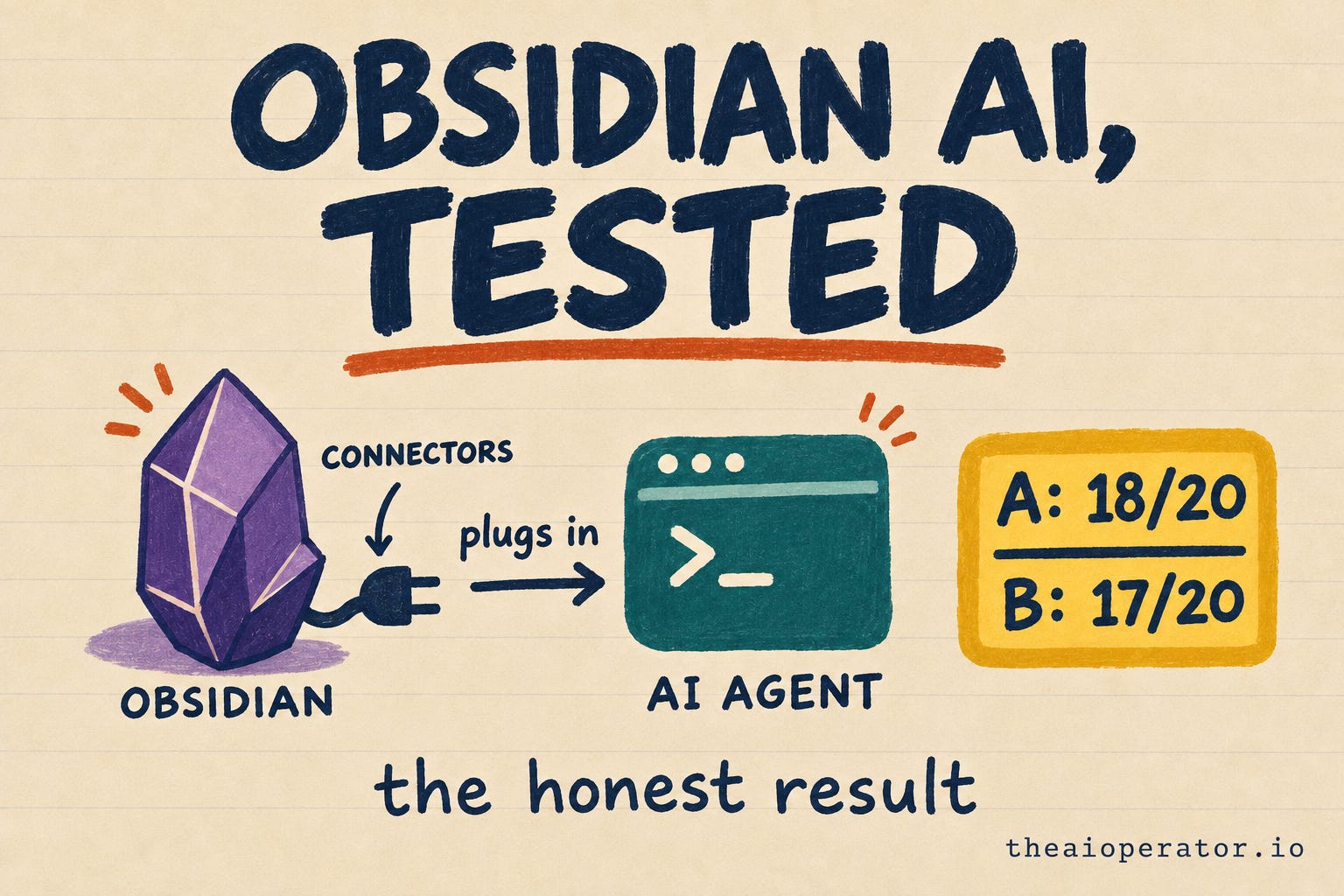
The Obsidian app has no AI built in. This week Obsidian launched official Connectors, skills that teach Claude, ChatGPT, Codex and other agents to work in your vault.
I tested them on 20 questions in a 300-note vault. Connectors alone got 18 right. Connectors plus my memory layer got 17.
My layer lost 2 answers to one flaw. I fixed it the same night, and the re-run scored 19 of 20.
This week, Obsidian launched official AI Connectors. A day later, I tested them against the tool I've spent 2026 building.
My tool is obsidian-second-brain, a free memory layer for AI agents with 5,477 stars on GitHub. I expected it to win. It didn't.
Connectors alone answered 18 of 20 questions right. Connectors plus my memory layer answered 17. I fixed the flaw that night, and the re-run scored 19. Here is what Obsidian AI means now, how I ran the test, and which setup to pick.
Does Obsidian have built-in AI?
No. The Obsidian app has no AI chat built in. Every AI feature comes from outside the app: a plugin, a connector, or an agent working on your note files.
The Connectors change how you add it. They work with Claude, ChatGPT, Codex, Cursor, Grok Bot, GitHub Copilot and more. Each Connector is a set of skills, which are instruction packs an agent loads when it needs them. Obsidian ships seven:
Obsidian Markdown: write notes with wikilinks, embeds, callouts and properties.
Bases: build database-style views of your notes, with filters and formulas.
Canvas: create and edit canvas boards.
Obsidian CLI: search, read and manage notes in the running app.
Obsidian Headless: sync and publish a vault without the desktop app.
Defuddle: turn a web page into clean Markdown.
Knap: fill Markdown templates from JSON or CSV data.
The GitHub repo behind them has 53,945 stars. Obsidian also states the privacy rule plainly. The Connectors send nothing by themselves, but any note an agent reads goes to the AI model you use.
What are the ways to use AI in Obsidian?
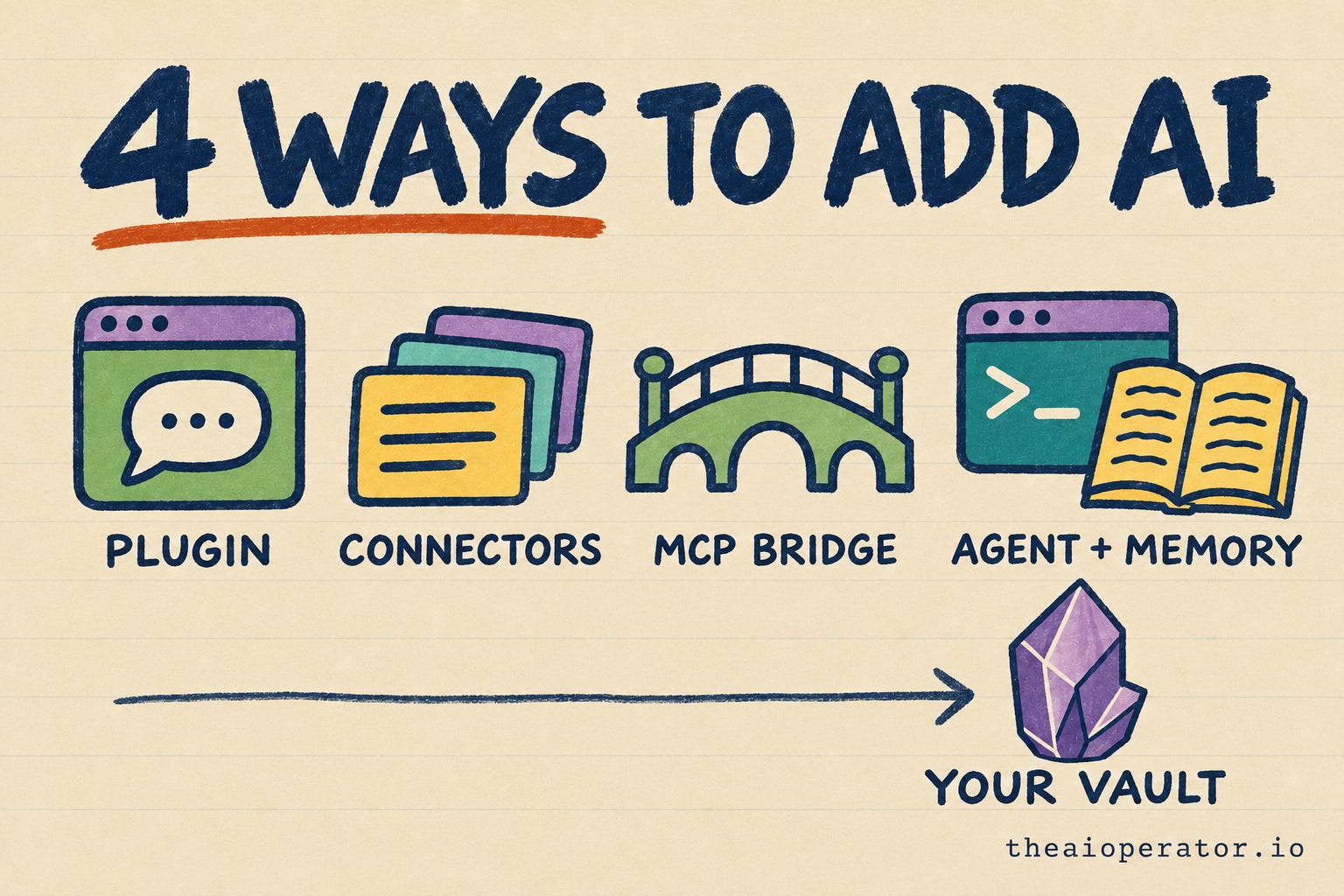
You have four options, and each one solves a different problem:
Plugins inside the app. Chat and search in a side panel. The biggest, per Obsidian's own plugin stats on November 26, are Copilot (3.9 million downloads), Smart Connections (1.3 million) and Text Generator (597,000).
Official Connectors. They teach an outside agent to write proper Obsidian files and use the app. Best if you already work in Claude, ChatGPT or Codex.
MCP bridges. MCP is a standard way to plug tools into an AI app. A bridge lets the app read and edit your vault through a fixed set of actions. I compared three ways to wire Obsidian MCP.
An agent in the folder, plus a memory layer. Claude Code or Codex works on the note files directly. A memory layer decides what to recall, what to write back and what to clean up. That is what obsidian-second-brain does.
Connectors and memory are not rivals. Connectors teach the agent Obsidian's formats. Memory decides what the agent knows when a session starts.
So the real question was whether the second layer still adds anything once the first exists.
How I tested the Connectors
I kept the test small and repeatable:
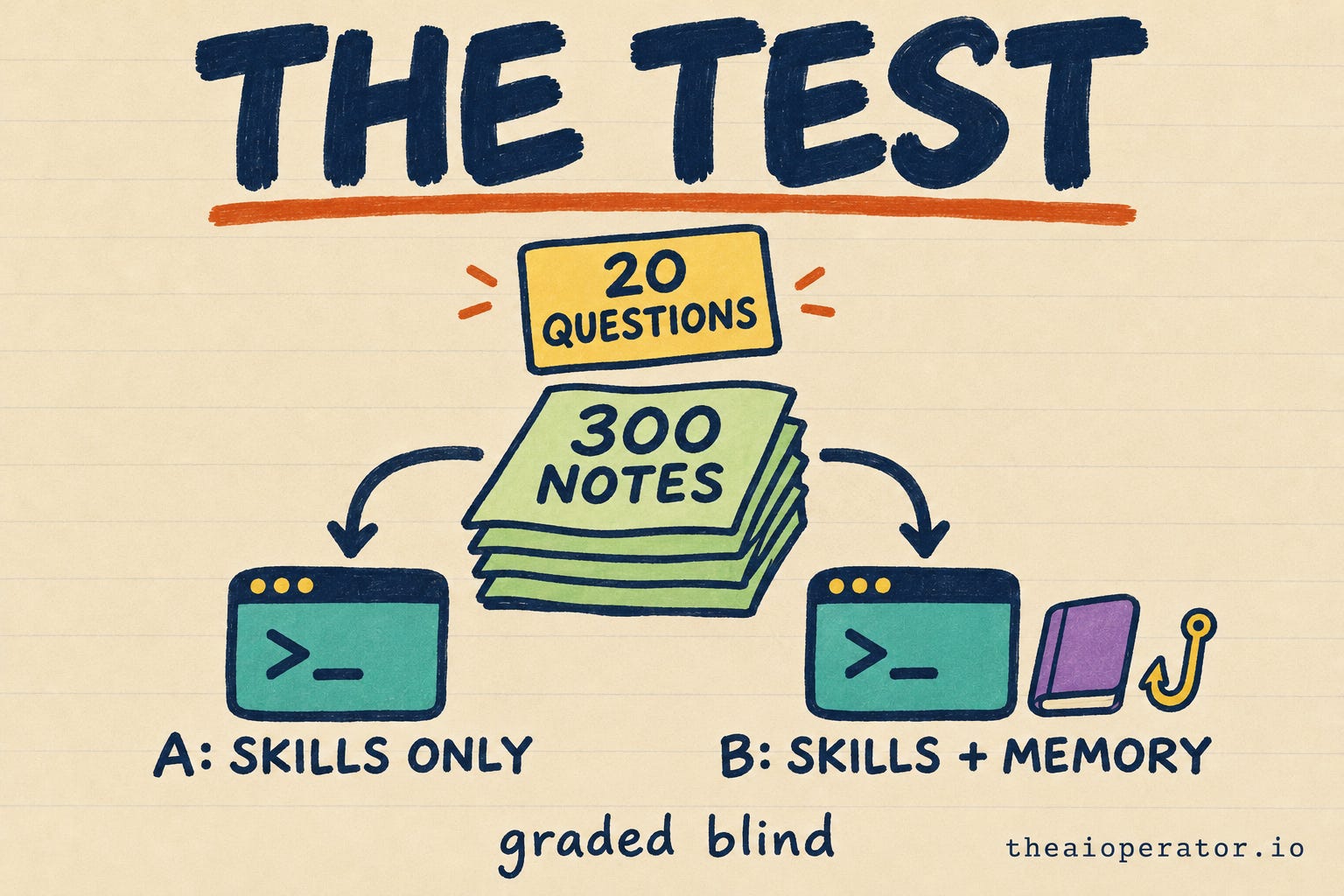
The vault: 300 made-up notes from the open benchmark in my repo. Every topic has one short main note and several longer logs, meetings and reviews that mention the topic more times than the main note does. Some notes contradict each other on purpose, and the answer key says which one is right.
The questions: 20 with known answers, 4 each on facts, decisions, people, links between notes, and contradictions.
Setup A: Obsidian's 7 official skills, and nothing else.
Setup B: the same skills, plus a 4-rule file that says "this vault is your memory, search it first", plus my recall hook. The hook adds up to 4 relevant notes to every prompt, or nothing when it isn't sure.
The run: Claude Code with Claude Sonnet, a fresh session for every question, read-only tools.
I graded all 40 answers blind against the answer key, with the setup names hidden.
What happened
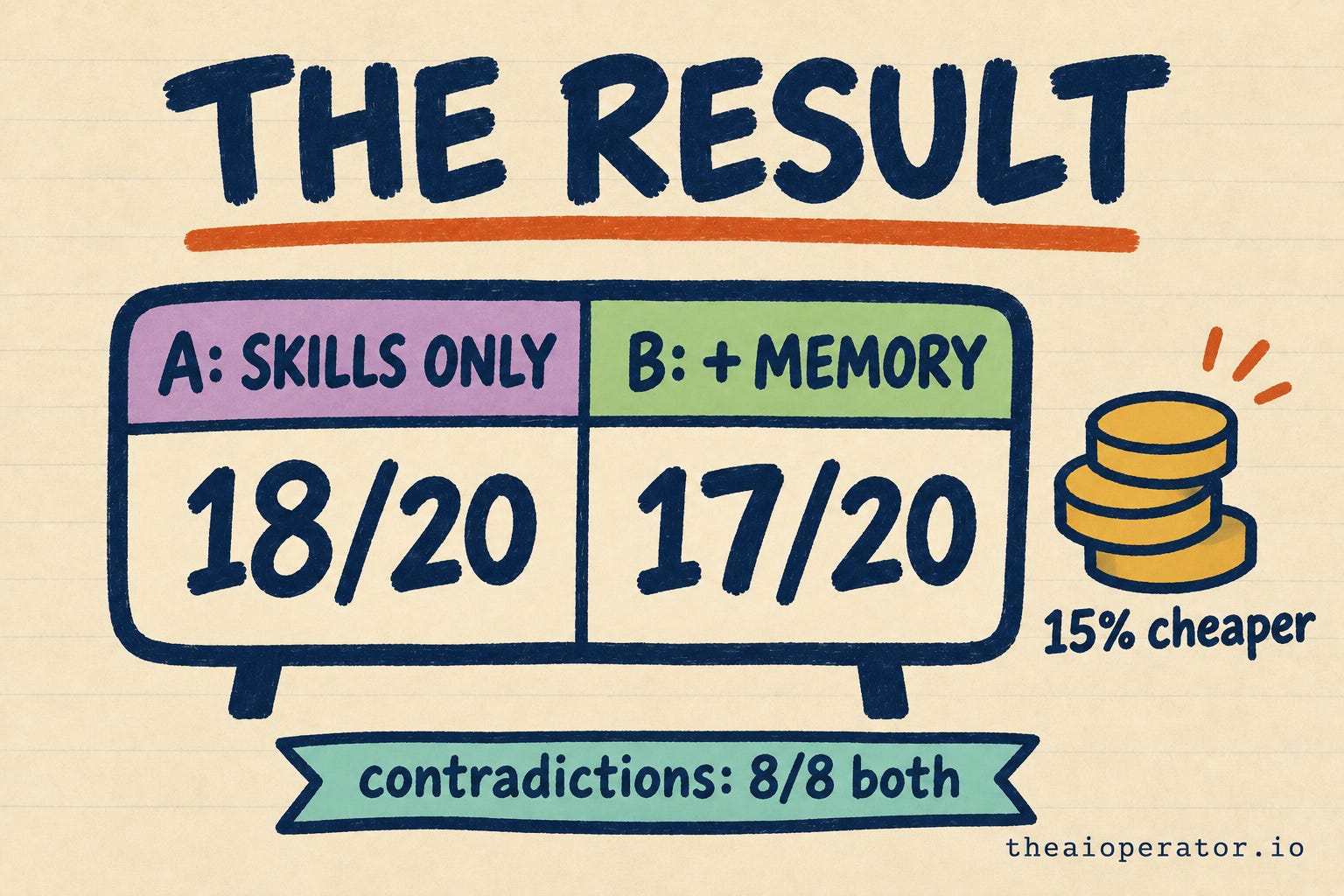
Setup A, Connectors only: 18 of 20 correct, $0.66 in total, 11.9 seconds per answer (median).
Setup B, Connectors plus memory: 17 of 20 correct, $0.56 in total, 10.8 seconds per answer.
Both setups: 8 of 8 on contradictions. Claude found the note that settles each conflict every time.
The gap is one question. My honest read: both setups are good. Claude plus Obsidian's skills plus plain search already finds almost everything in a tidy vault.
That matches what I found when AI memory tools lost to search. Plain search over your own notes is hard to beat.
Why my memory layer lost two questions
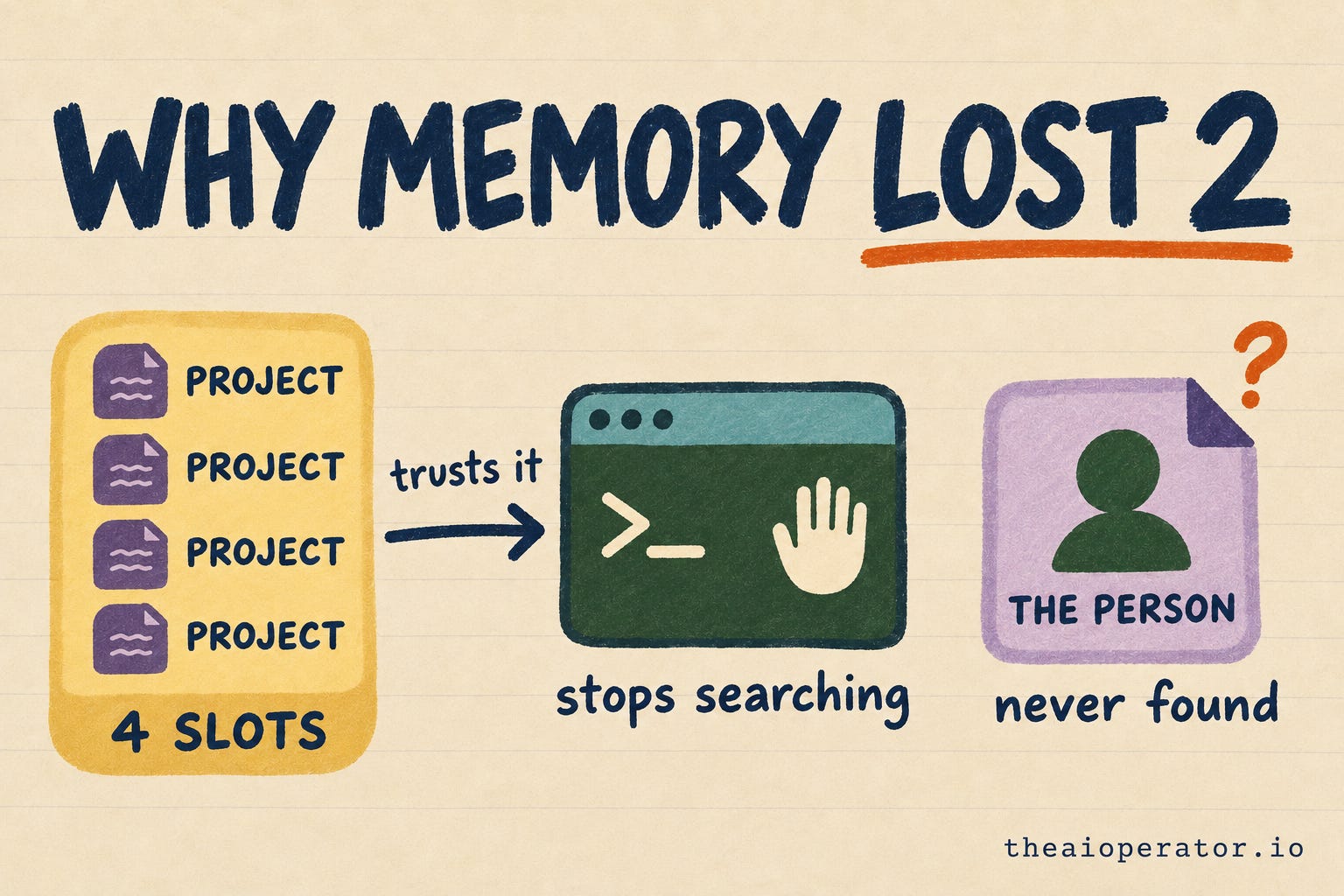
Both misses were the same question asked two ways: who should review a change to a project's data structure?
The answer sits in two notes. One is the project note. The other is the note on the person who owns those reviews.
My hook filled its 4 slots with notes about the project. None was about the person. Claude read the short list, trusted it and stopped searching. Setup A had no list, so Claude kept searching and found the person.
A hint that looks complete can end the search. I built two fixes the same night:
No topic gets more than 2 of the 4 slots. The free slots go to the next people and projects in the results.
The list now tells the agent it is a starting point, not the full answer.
Then I ran the same 20 questions again, graded blind. With both fixes, the memory layer scored 19 of 20, one more than Connectors alone. The cap did the work. The warning line alone scored 17. One run per setup, so treat a one-question gap as noise. Both fixes are in obsidian-second-brain now.
My setup won one question back. Asked about a made-up technique in plain words, Setup A answered from general knowledge in one step and never opened the vault. The rules file in Setup B made Claude search first.
What this test did not measure
Every question was read-only, on a vault that never changed. That is the part Connectors and search handle well. It is not where memory earns its place.
Memory matters over weeks:
Write-back: a decision made on Monday is in the vault on Tuesday.
The next session: the agent starts with what you settled last week, so you don't explain it again.
Cleanup: stale notes get marked or merged before they mislead.
Many agents: Claude Code, Codex and Gemini read and write the same notes.
None of that was in this test. I covered how those parts work in the agent memory guide.
Which Obsidian AI setup should you use?
Pick by what you want the AI to do:
Chat inside Obsidian: install a plugin like Copilot or Smart Connections.
Work in your vault from Claude, ChatGPT or Codex: install the official Connectors. In Claude Code it takes two commands:
claude plugin marketplace add obsidianmd/obsidian-skills
claude plugin install obsidian@obsidian-skills
Remember across sessions, or share one vault between agents: add a memory layer on top. obsidian-second-brain is free and MIT-licensed, and the setup guide takes about 5 minutes.
The layers stack. Connectors teach the format, and a memory layer keeps what the agent learns.
Want the ready-made version? The Vault has AI tools for paid members, each set up in 10 minutes or less.
Frequently asked questions
Does Obsidian have AI built in?
No. The Obsidian app has no AI chat. AI comes from community plugins, the official Connectors launched in November 2026, or agents like Claude Code working on your note files.
What are Obsidian Connectors?
Official skills from Obsidian that teach AI agents to write Obsidian notes, Bases and Canvas files, and to use the Obsidian CLI. You install them from the Claude, ChatGPT, Cursor and other agent plugin stores.
Is Obsidian AI free?
The Connectors and the main AI plugins are free to install. You still pay for the AI model you connect, unless you run a local model.
How do I connect Claude to Obsidian?
In Claude Code, run claude plugin marketplace add obsidianmd/obsidian-skills, then claude plugin install obsidian@obsidian-skills. In the Claude app, add Obsidian from the official plugin directory.
What is the best AI plugin for Obsidian?
By downloads, Copilot leads with 3.9 million, then Smart Connections with 1.3 million (Obsidian plugin stats, November 26, 2026). Copilot is for chat, and Smart Connections finds related notes.
Does Claude remember my Obsidian vault between sessions?
Not by itself. Every session starts fresh. A rules file, a recall hook or a memory layer has to hand Claude the notes that matter.
Key takeaways
The Obsidian app has no AI built in. Its official Connectors, launched in November 2026, teach outside agents to work in a vault.
In a 20-question test on a 300-note vault, Connectors alone scored 18 and Connectors plus a memory layer scored 17.
Plain search over tidy notes answers most one-off questions. Claude got all 8 contradiction questions right in both setups.
A recall hint that looks complete can stop an agent from searching further. Capping one topic at 2 of the 4 slots fixed it: 19 of 20 on a blind re-run.
A rules file that says "search the vault first" stops an agent from answering vault questions from general knowledge.
Memory earns its place over weeks, through write-back, the next session, cleanup and shared vaults, not in single read-only questions.
Further reading
Obsidian Connectors, Obsidian Help
obsidian-skills on GitHub, Obsidian
The vault retrieval benchmark, the test vault used in this post
About the author
I'm Eugeniu Ghelbur, an AI Automation Engineer working on agent memory. I built obsidian-second-brain, an open-source memory layer that 8 AI agents can share. It's MIT-licensed and starred by over 5,400 people on GitHub. I write The AI Operator.